


Persian Rug Cushion Prices: What Determines the Value of a Handmade Vintage Piece?
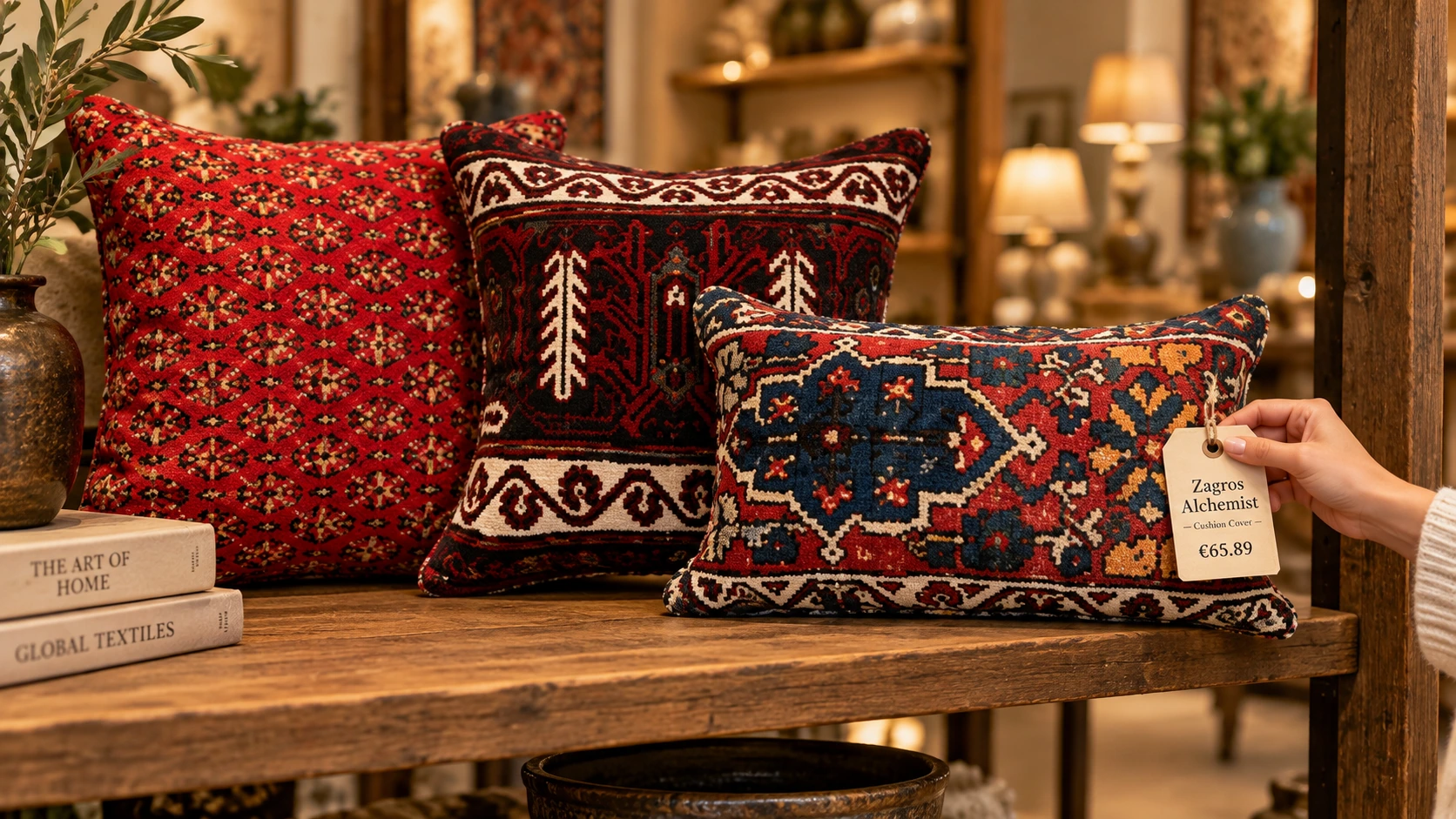
You’ve probably come across a Persian rug cushion online, fallen in love with the colors, and then paused when you saw the price tag. That moment of hesitation is completely natural. After all, cushions at a department store cost a fraction of the price. So what makes a handmade vintage rug cushion worth the investment?
The short answer: you’re not just buying a cushion. You’re buying a fragment of a hand-woven carpet that someone spent months — sometimes years — creating on a loom decades ago. The wool was spun by hand, the dyes were prepared from local plants and minerals, and every single knot was tied by a real person’s fingers. That history, that labor, and that authenticity are woven right into the fabric you lean against on your sofa.
In this article, we’ll break down exactly what goes into Persian rug cushion prices, why handmade vintage pieces cost more than factory-made alternatives, and how to feel confident that you’re getting real value for your money.
Why Persian Rug Cushions Are Priced Differently from Mass-Produced Cushions
Walk into any home décor chain and you’ll find cushions for ten or twenty dollars. They’re made from synthetic fabric, printed with a machine, stuffed on an assembly line, and shipped by the thousands. There’s nothing wrong with them if all you need is something soft to sit on.
But a Persian rug cushion belongs to a completely different category. It starts its life as part of a full-sized handwoven carpet — often one that’s 50, 60, or even 70 years old. When a section of an antique rug is carefully selected, cleaned, and transformed into a cushion cover, you’re holding a piece of living textile art. No two are alike, because no two rugs are alike.
Here are the key factors that shape the price of an authentic handmade vintage rug cushion:
- Age and provenance: A rug woven 70 years ago carries the design language, color palette, and weaving traditions of a specific era and region. That heritage cannot be replicated today.
- Hand-knotted construction: Every centimeter of the original carpet was knotted by hand. Machine-made rugs can produce thousands of knots per minute; a skilled weaver might tie a few hundred per hour. The difference in density, texture, and character is immediately visible.
- Natural wool fiber: Vintage Persian rugs are typically made from hand-spun natural wool, which ages beautifully, develops a soft patina over time, and feels distinctly different from polyester or acrylic.
- Natural and vegetable dyes: Many older rugs use dyes derived from pomegranate rinds, indigo plants, walnut husks, and madder root. These dyes mellow gracefully with age, producing the warm, layered tones that collectors prize.
- Hand-stitched finishing: At MAWA Home Decor, each cushion cover is stitched by hand — not just the front panel cut from the rug, but the backing, the seams, and the closure. This level of craftsmanship adds both durability and a bespoke quality you can feel the moment you pick one up.
- One-of-a-kind status: Because each cushion is made from a unique section of a unique vintage rug, no one else in the world owns the exact same piece. That exclusivity is part of what you’re paying for.
Understanding the Real Cost Behind Handmade Rug Cushion Prices
When you see the price of a handmade rug cushion and compare it to something from a fast-décor retailer, it helps to think about where the money actually goes.
First, there’s the sourcing. Finding authentic vintage Persian rugs in good enough condition to be repurposed takes time, expertise, and a reliable network of suppliers. Not every old rug qualifies. The wool needs to be structurally sound, the colors need to be stable, and the weave needs to be tight enough to hold up as a cushion cover that will be used daily.
Then there’s the selection process. A single rug might yield only two or three cushion panels with the right balance of pattern, color, and condition. The rest may not meet quality standards. This means a significant portion of the raw material isn’t used, and that selectivity is reflected in the final price.
After that comes the handwork: cutting, backing, stitching, and finishing each piece individually. There’s no shortcut here. A sewing machine can handle part of the job, but the final details — aligning the pattern, reinforcing the edges of the old wool, ensuring the cushion sits properly — require skilled hands and patience.
Finally, there’s the care that goes into cleaning and preparing the vintage textile. Old rugs need gentle, expert washing to remove decades of dust without damaging the fibers or fading the colors. This alone can take days.
So when you look at a vintage rug cushion’s price, you’re looking at the accumulated cost of sourcing, selecting, cleaning, crafting, and quality-checking a one-of-a-kind product made from a decades-old handmade textile. Suddenly, the price makes a lot more sense.
What Makes a Vintage Rug Cushion Worth More Than a New One?
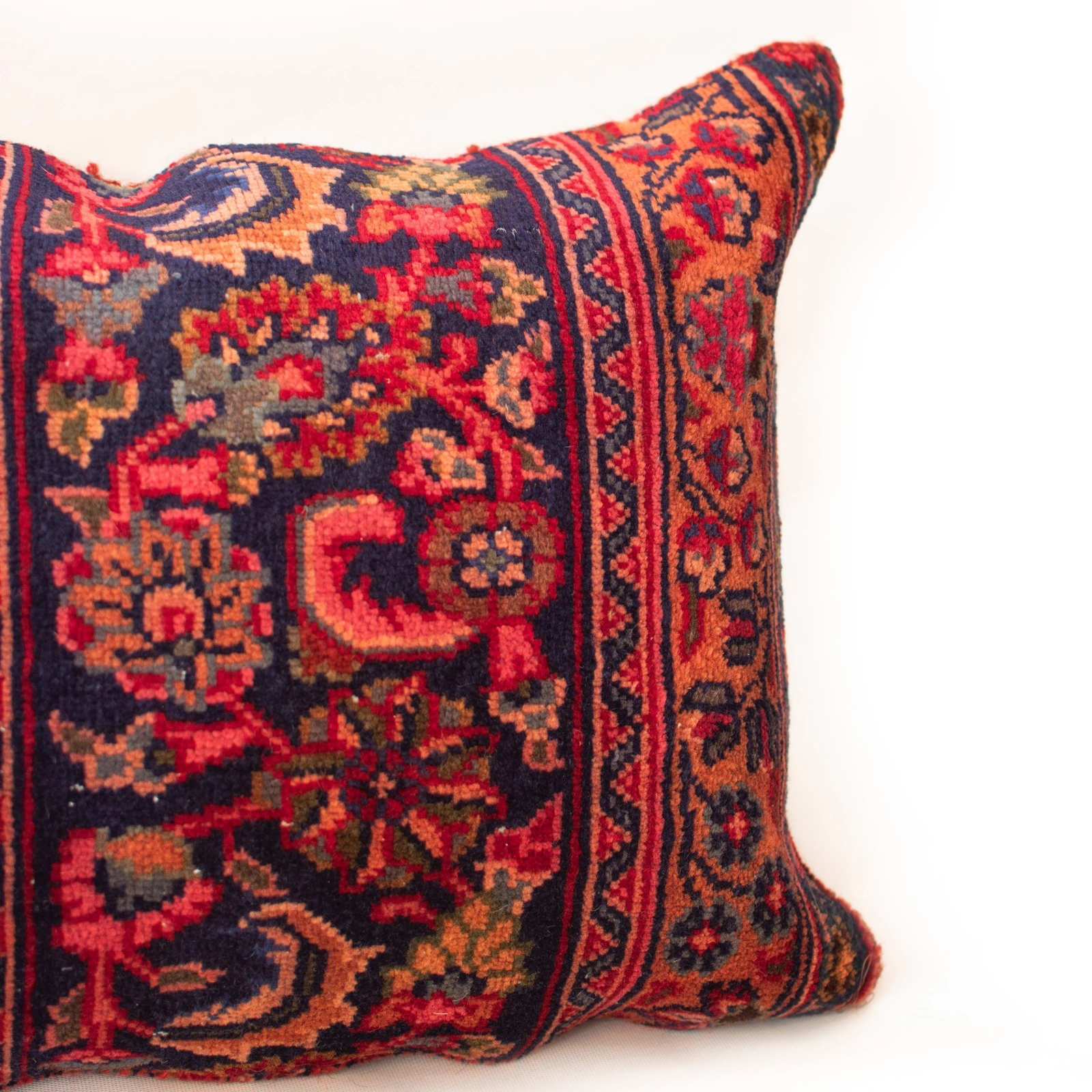
There’s a paradox in the world of textiles: sometimes older is genuinely better. A brand-new cushion made from a brand-new rug — even a hand-knotted one — doesn’t have the same depth of color, softness of wool, or character of pattern that a 70-year-old piece carries.
Vintage wool develops what textile experts call a “patina.” It’s the subtle softening of color and texture that happens naturally over decades. You can’t rush it, you can’t fake it, and you can’t buy it new. It’s the reason antique rug collectors are willing to pay premium prices for well-preserved old pieces, and it’s the same reason a cushion made from vintage rug wool has a warmth and richness that a new product simply can’t match.
There’s also the design factor. Many of the patterns found in 50- to 70-year-old Persian rugs reflect tribal and regional weaving traditions that are becoming increasingly rare. Younger weavers often work from commercial patterns designed for export. The older pieces carry motifs, color combinations, and design choices rooted in local culture — geometric medallions, symbolic animal figures, stylized florals passed down through generations of women weavers.
When you place a cushion like that on your sofa, it doesn’t just look beautiful. It carries meaning. And meaning, in a world full of mass-produced décor, is genuinely rare.
A Closer Look: The Hamadan Nasm Cushion
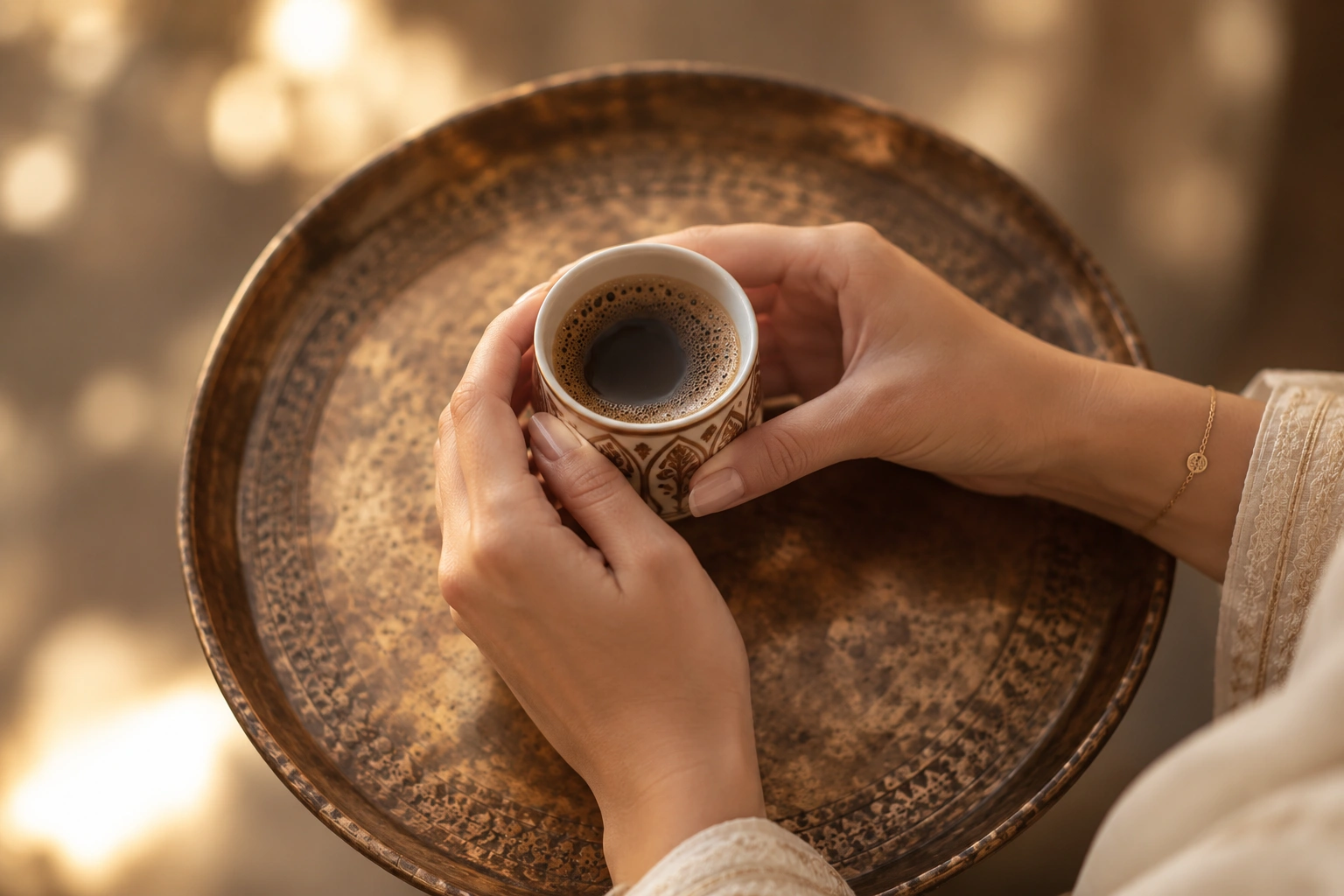
To make all of this more concrete, let’s look at a specific example. The Hamadan Nasm cushion from MAWA Home Decor store is made from a hand-woven Hamadan rug that’s approximately 70 years old. The wool is natural, the dyes are traditional, and the palette centers on deep reds and rich indigo blues — colors that are iconic to the Hamadan weaving region of western Iran.
Every stitch on this cushion is done by hand. The backing is carefully chosen to complement the front panel, and the construction is designed to last. Because it’s cut from a single vintage rug, there is literally only one Hamadan Nasm in existence. Once it’s sold, it’s gone.
[Shop the Hamadan Nasm Cushion]
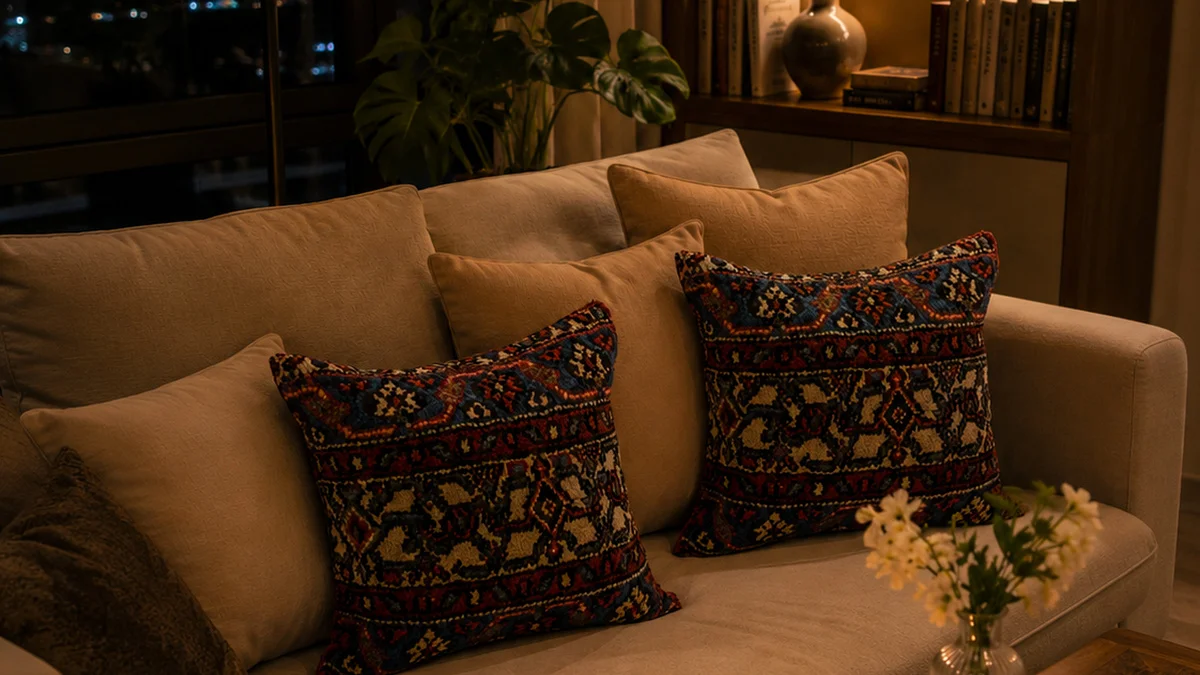
This is the kind of piece that anchors a room. It works equally well on a minimalist linen sofa, a traditional majlis seating arrangement, or a reading chair in a cozy study. The deep reds add warmth without overwhelming the space, while the indigo tones keep the palette grounded and sophisticated.
How to Judge Whether a Persian Rug Cushion Price Is Fair
Not all rug cushions are created equal, and not all high prices are justified. Here are a few things to check before you buy:
- Is the rug genuinely handmade? Look for slight irregularities in the pattern and knot density. A perfectly uniform pattern usually means machine production.
- Is the wool natural? Natural wool has a subtle luster and a soft, slightly oily feel. Synthetic fibers tend to look flat and feel dry or plasticky.
- Is the age verifiable? A trustworthy seller should be able to tell you approximately how old the source rug is and where it comes from. Vague claims like “antique-style” or “vintage-inspired” usually mean the piece is new and made to look old.
- Is the stitching done by hand or machine? Hand-stitched cushions hold up better over time and show a level of care that machine-stitched products can’t replicate.
- Is each piece unique? If the seller has 500 identical cushions in stock, they’re not cutting them from vintage rugs. Authentic vintage rug cushions are produced in very limited quantities — often just one of each design.
At MAWA Home Decor store, every cushion comes with clear information about the rug’s origin, age, material, and construction method. Transparency isn’t a bonus; it’s the baseline.
Frequently Asked Questions About Persian Rug Cushion Prices
Why are Persian rug cushions more expensive than regular decorative cushions?
Because they’re made from authentic hand-knotted vintage rugs, not factory-printed fabric. The raw material alone — a decades-old handwoven carpet — is far more valuable than any bolt of new textile. Add hand-stitched construction and one-of-a-kind exclusivity, and the price reflects the true cost of an artisan product with real heritage.
How do I know if a Persian rug cushion is genuinely handmade?
Look at the back of the rug section if possible. Handmade rugs show individual knots on the reverse side, while machine-made rugs have a uniform, looped backing. You should also look for the natural variations in color and pattern that come from hand-dyeing and hand-weaving.
Are vintage rug cushions durable enough for everyday use?
Absolutely. Hand-knotted wool rugs are among the most durable textiles ever made — that’s why so many survive for 50, 70, or even 100 years. A well-made cushion from vintage rug wool will hold up to daily use for years, and the natural wool actually becomes softer and more comfortable over time.
Can I use a Persian rug cushion in a modern interior?
Yes, and this is one of the most popular ways to use them. A single vintage rug cushion on a neutral-toned sofa creates an instant focal point. The handmade texture and warm color palette of Persian rug wool contrast beautifully with clean modern lines, concrete surfaces, and minimalist furniture.
What’s the difference between a “vintage” rug cushion and an “antique” one?
In the rug world, “antique” typically refers to pieces over 80–100 years old, while “vintage” covers pieces roughly 30–80 years old. Most cushions at MAWA Home Decor fall into the vintage category, meaning they’re old enough to have developed beautiful patina and character, but young enough that the wool is still structurally strong and vibrant.
Is a luxury cushion for a majlis seating area worth the higher price?
If your majlis is a space where you receive guests, share coffee, and create an atmosphere of warmth and hospitality, then yes — the quality and beauty of your furnishings matter. A handmade Persian rug cushion adds texture, color, and a sense of heritage that guests notice and appreciate. It’s the kind of detail that quietly elevates a room.
The Psychology of Buying Something That Lasts
We live in a time when most home décor is designed to be replaced every few years. Trends change, fabrics wear out, colors fade, and the cycle starts again. There’s a hidden cost to that cycle — not just financial, but environmental and emotional.
A handmade vintage rug cushion breaks that pattern. It’s not a trend piece. It’s not something you’ll want to swap out next season. The colors were chosen by a weaver working within a tradition centuries old, and they’ll look just as beautiful ten years from now as they do today. The wool will soften, the patina will deepen, and the piece will become more — not less — valuable over time.
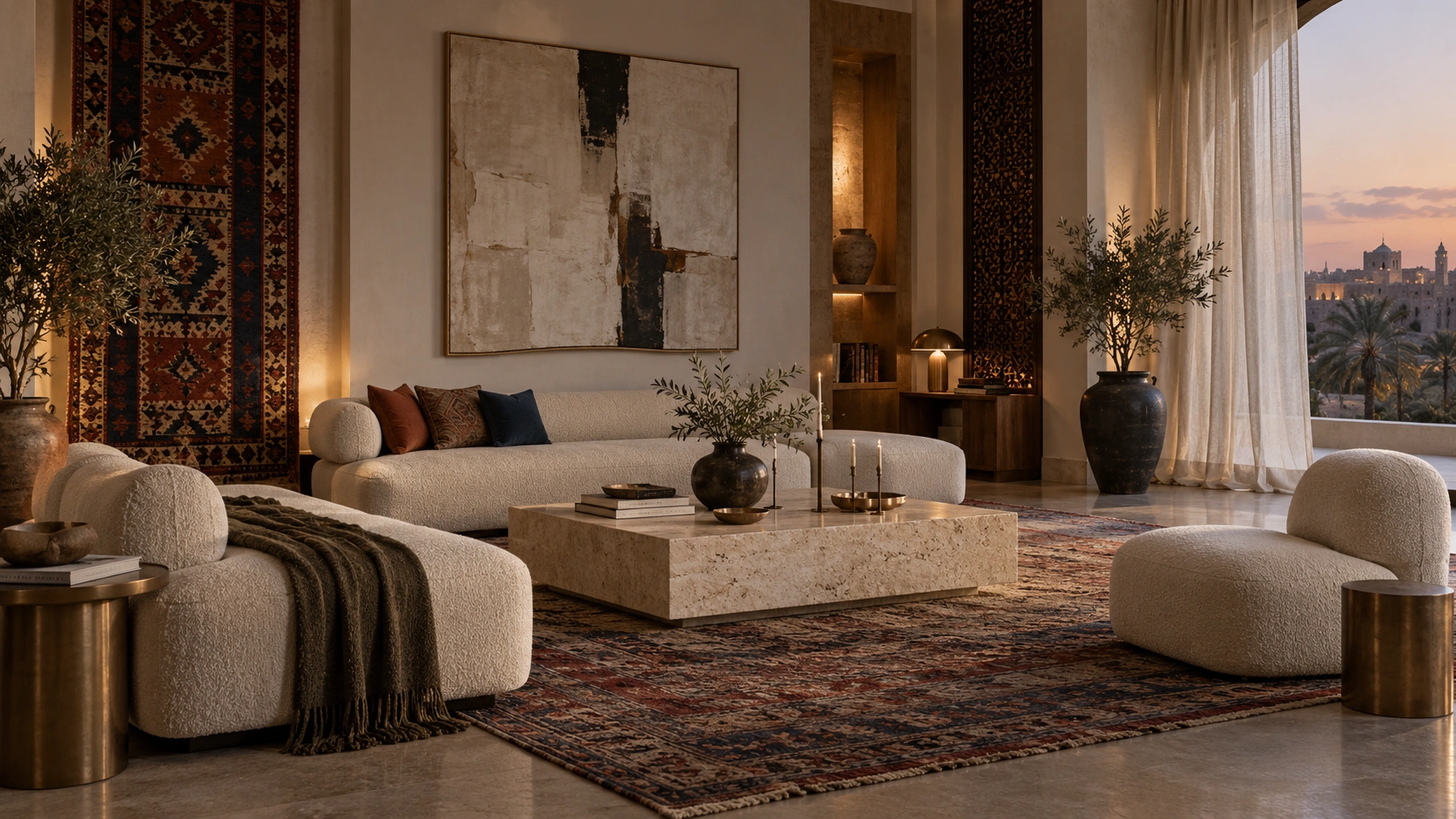
There’s a certain peace of mind that comes with owning something you know you won’t need to replace. Something made with real skill from real materials by real hands. That peace of mind is, honestly, part of what you’re paying for. And for many people, it’s the most valuable part.
Wrapping Up: Price, Value, and What Really Matters
Persian rug cushion prices reflect a straightforward reality: genuine handmade vintage pieces cost more to source, more to prepare, and more to finish than mass-produced alternatives. Every cushion at MAWA Home Decor store starts with a hand-knotted rug that’s decades old, passes through careful selection and cleaning, and is finished with hand-stitched construction — resulting in a product that’s truly one of a kind.
The question isn’t really “why does this cost more?” The question is: what do you want in your home? Something temporary and mass-produced, or something with history, texture, warmth, and soul?
If you already know the answer, take a look at the collection. Each piece has its own story, its own palette, and its own personality. Once a piece is gone, it’s gone for good.
Explore the Collection
Browse the full range of handmade vintage Persian rug cushions at MAWA Home Decor. Find the one that speaks to your space — and make it yours before someone else does.