


The Hidden Story Behind Every Persian Rug Cushion: From Nomadic Weavers to Your Living Room
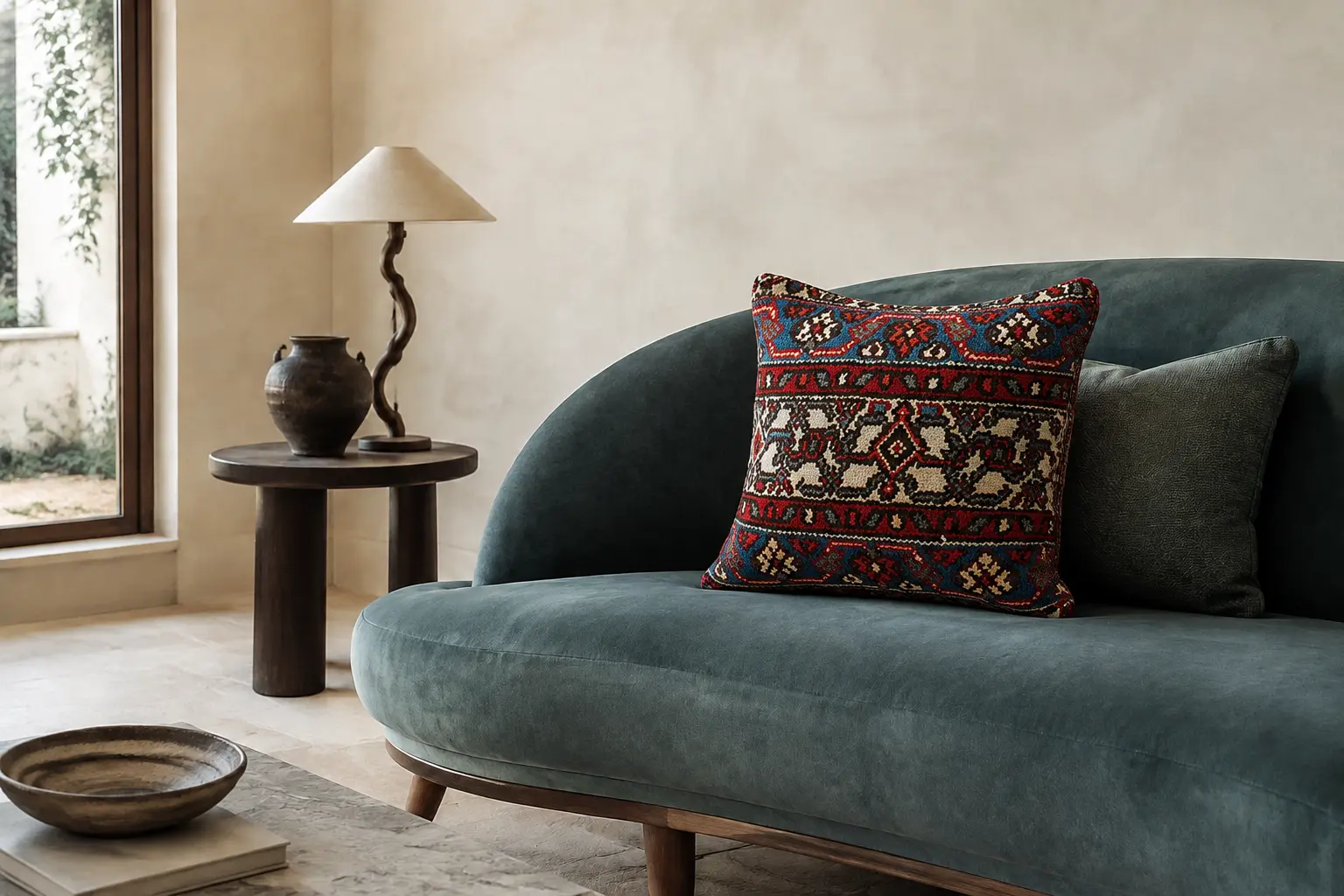
A Persian rug cushion is never just a decorative accent. Behind its texture, colours, and carefully finished edges lives a long human story: a story of nomadic journeys, patient hands, inherited skills, and a deep respect for materials. When you place one on your sofa, reading chair, or majlis seating, you are bringing a small piece of that story into your home.
At Mawa Home Decor, we transform selected sections of authentic handwoven Persian rugs into elegant cushions for contemporary interiors. The result is a meeting point between heritage and modern living. Each cushion keeps the character of the original rug while offering the comfort and flexibility you expect from a refined home accessory.
Where the story begins: nomadic weaving traditions
Many Persian rugs began their lives in villages, mountain regions, or among nomadic communities. For nomadic women, weaving was both a practical craft and a visual language. A rug could be used for warmth, seating, storage, or as part of a wedding trousseau. At the same time, its colours and motifs carried memories of landscapes, animals, family traditions, and personal imagination.
Nomadic weavers often worked without a formal paper design. Instead, patterns were remembered, adapted, and interpreted from experience. This is one reason handmade rugs can feel alive: a small variation in a motif, an uneven line, or a subtle change in colour is evidence of the maker’s hand rather than a manufacturing defect.
The history of Persian rug making is shaped by many regions, each with its own rhythm and visual identity. Some rugs feature bold geometric forms, while others use delicate floral arrangements. Certain palettes feel warm and earthy; others combine deep indigo, rust, ivory, or muted green. When a rug becomes a cushion, these regional details remain visible in a more intimate format.
The art of Iranian hand weaving
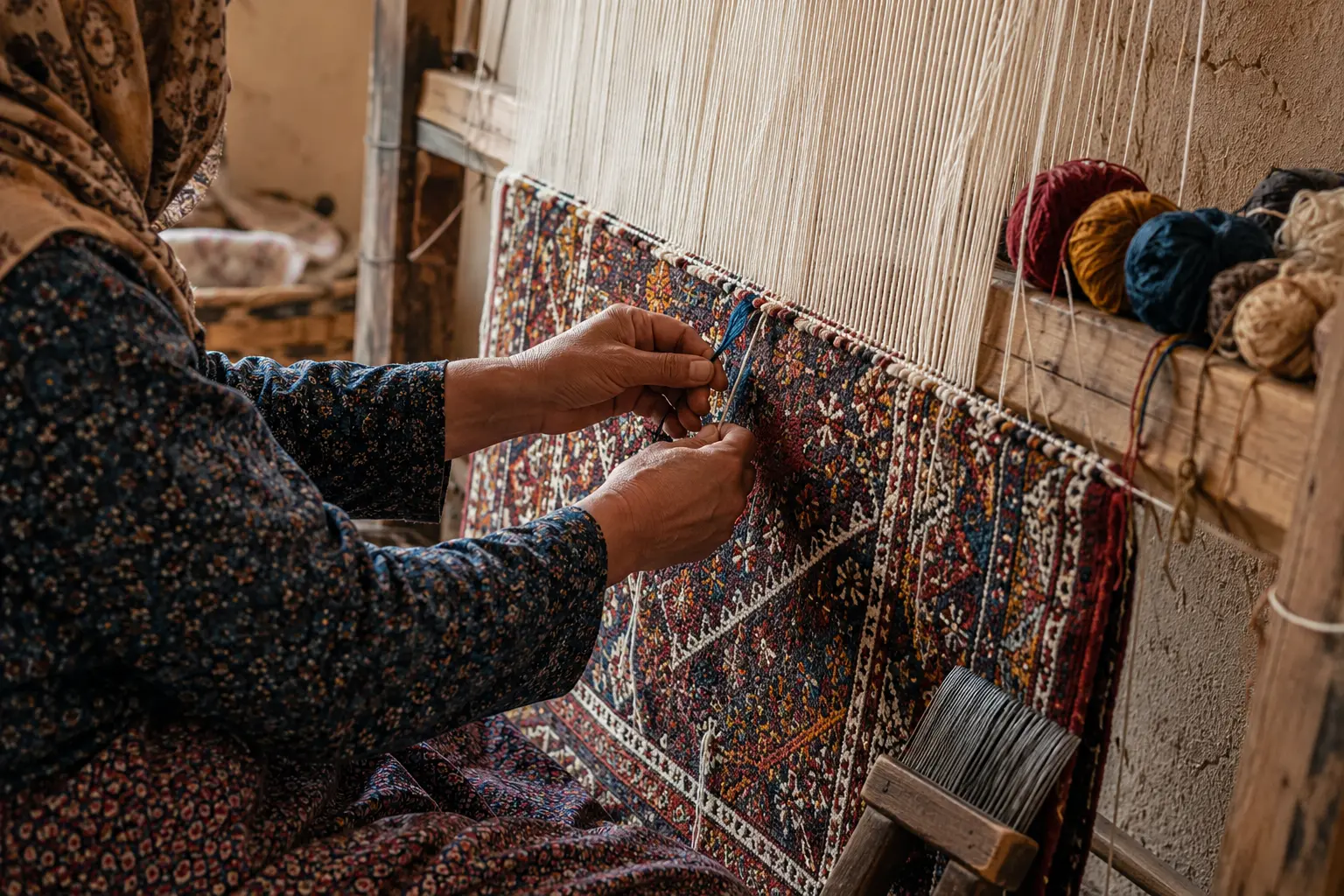
The فن of Iranian hand weaving is based on patience. A weaver ties thousands of knots, row after row, while managing tension, colour, and proportion. Depending on the rug’s size, density, and design, the process may take months or even longer. The craft demands concentration, but it also allows room for personality.
Handwoven rugs are traditionally made with materials such as wool, cotton, and sometimes silk. Wool gives a rug resilience and a welcoming tactile quality. Cotton often provides strength in the foundation, while silk can add a refined sheen to selected details. Before a rug is chosen for a cushion, its condition, weave, colour stability, and texture should be carefully assessed.
A Persian rug cushion should feel substantial without becoming stiff. It should have enough structure to support the back or soften a seat, while retaining the natural irregularities that make handmade textiles special. At Mawa Home Decor, the conversion process respects the original textile, so the cushion does not lose its sense of age or authenticity.
Why the authenticity of Persian cushions matters
When shoppers choose a handmade cushion, they are often looking for more than colour coordination. They want something that feels considered and personal. The أصالة of Persian cushions comes from their material history, handmade surface, and visual individuality. No two pieces are perfectly identical, and that difference can make a room feel collected rather than decorated in one afternoon.
Authenticity also changes the way a product is experienced. A machine-made print may imitate a traditional motif, but it usually has a uniform surface and predictable repetition. A genuine handwoven fragment reveals small shifts in knotting, tone, and line. These details invite you to look closer and create a quieter kind of luxury.
From a floor covering to a meaningful home accessory
Repurposing a Persian rug into a cushion gives the textile a new role. Instead of being viewed only from above, its design becomes part of the eye level of your living room. You can appreciate the border while sitting on the sofa, notice the knot structure when sunlight moves across the fabric, or use the cushion to introduce colour without repainting an entire space.
This format works especially well in homes that blend modern architecture with regional character. A neutral sofa, pale stone floor, or clean-lined coffee table can provide a calm background for a richly textured cushion. In a majlis, several cushions can create a layered arrangement that feels welcoming without looking overly matched.
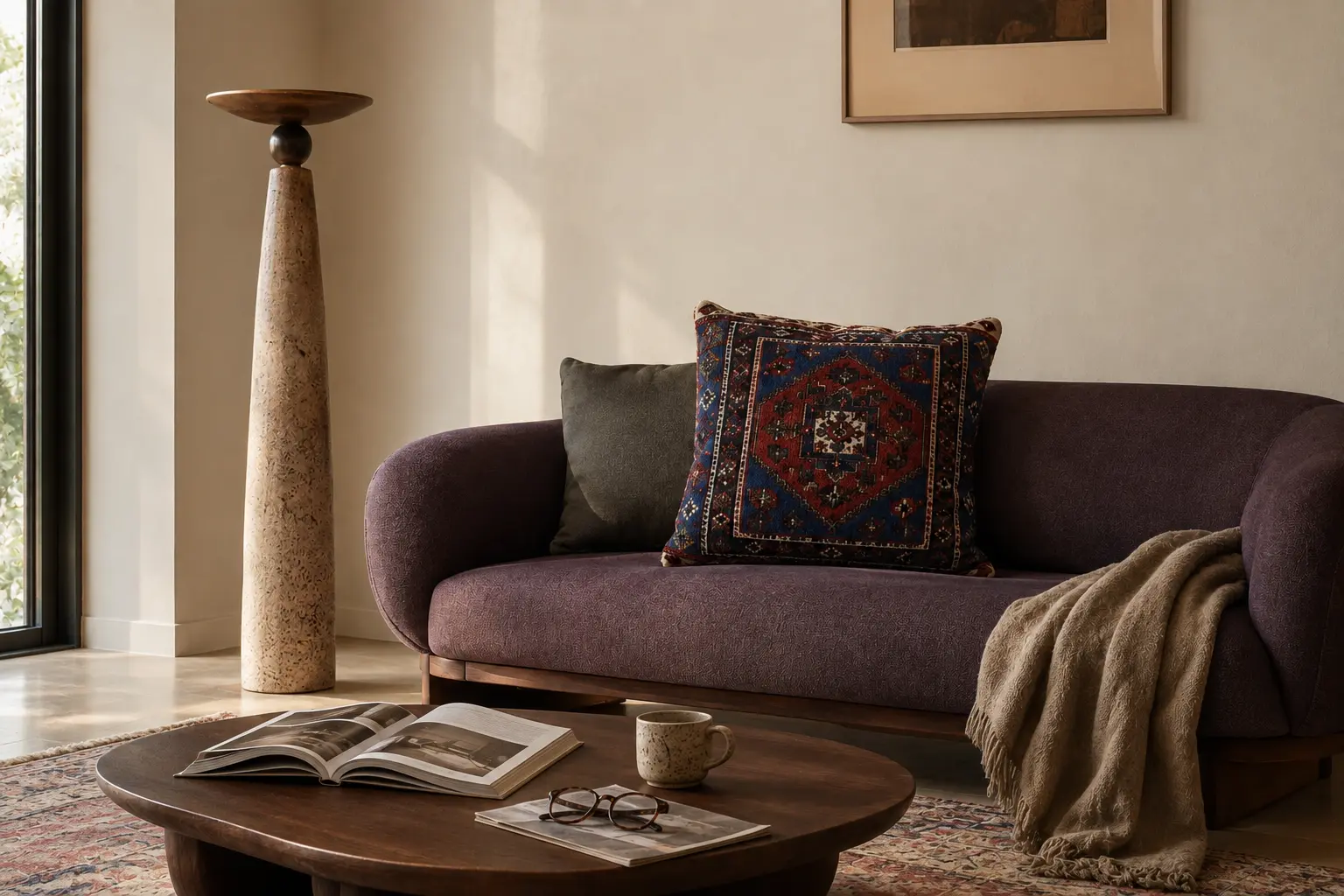
- Pair a bold geometric cushion with plain linen or cotton upholstery.
- Use one richly coloured piece as a focal point on a neutral sofa.
- Combine different patterns only when they share a colour family.
- Place a smaller cushion on an armchair to add comfort and visual balance.
- Rotate cushions seasonally to refresh the room without major changes.
How to choose the right cushion for your home
Begin with the feeling you want to create. Do you prefer a calm, softly layered room, or do you enjoy a more expressive setting? For a serene interior, look for ivory, sand, faded blue, or gentle terracotta. If your room already contains neutral furniture, a deeper red, saffron, navy, or charcoal accent can bring useful contrast.
Scale is just as important as colour. A large sofa can carry a substantial cushion with a strong border, while a compact chair may look better with a smaller, quieter pattern. Consider the viewing distance too. Fine motifs are beautiful up close, whereas larger geometric shapes remain readable across the room.
Ask practical questions before buying. Will the cushion be used every day or mainly styled for guests? Do you need a removable cover? Is the filling supportive enough for your preferred seating position? A luxury accessory should fit your lifestyle, not simply look attractive in a photograph.
Care advice for a textile with history
Handwoven pieces benefit from gentle treatment. Keep your cushion away from prolonged, direct sunlight to reduce the risk of fading. Dust it lightly and follow the care instructions supplied with the product. Avoid soaking or using harsh household cleaners, as strong moisture and chemicals can affect natural fibres and dyes.
Small changes in texture over time are normal. They are part of the life of a handmade textile. If a thread loosens, do not pull it. Trim only when advised by a professional, and contact the seller if you are unsure. With sensible care, a well-made Persian rug cushion can remain beautiful through years of everyday use.
Frequently asked questions
Is every Persian rug cushion completely unique?
Most handmade pieces have variations in colour, motif placement, and texture. Even cushions cut from the same rug may not look identical, which is part of their handmade appeal.
Can I use a Persian cushion in a modern home?
Absolutely. The contrast between traditional weaving and contemporary furniture often creates the most sophisticated result. Keep the surrounding pieces simple so the textile has room to speak.
Are these cushions suitable for a Gulf majlis?
Yes. Their texture and cultural depth work naturally with majlis seating, floor arrangements, and layered hospitality spaces. Choose durable construction when the cushions will receive frequent use.
How do I style several patterns together?
Choose a shared colour link, then vary the scale. One cushion can carry a bold design, another a quieter border, and a third a plain complementary fabric.
What makes a handmade cushion feel luxurious?
Luxury comes from the quality of the textile, the finishing, the comfort of the filling, and the emotional connection you feel when using it. It does not require excessive decoration.
A small object with a lasting emotional value
The history of Persian handmade rugs is ultimately a history of people: women who learned from mothers and grandmothers, families who carried weaving traditions across changing landscapes, and makers who turned ordinary fibres into enduring patterns. A cushion allows that heritage to live close to you every day.
When you choose a piece from Mawa Home Decor, consider how it will participate in your home’s story. It may welcome guests in the majlis, support you during a quiet morning, or become a thoughtful gift for a woman who appreciates craft and meaningful design. Its value is found not only in appearance, but also in the sense of connection it brings.
Bring a piece of Persian weaving into your space
Explore the Persian rug cushions at Mawa Home Decor and choose the texture, palette, and scale that feel right for your home. Let a carefully made cushion add comfort, character, and a visible link to the heritage of Iranian hand weaving.
Ready to find the piece that feels like yours? Visit Mawa Home Decor and make your living room part of the story.