


Persian vs. Turkish vs. Moroccan Cushions: Which One Truly Belongs in a Luxury Arab Home?
Some décor choices are easy. Cushions are not one of them.
In a refined Arab home, a cushion does much more than fill a corner on a sofa. It affects the mood of the room, the softness of the seating, the sense of hospitality, and even how polished the whole space feels. That is why many homeowners pause at the same question: should they choose Persian, Turkish, or Moroccan cushions?
The honest answer is not that one tradition is “good” and the others are not. Each has real beauty. Each comes from a deep craft history. And each creates a different feeling at home. The better question is this: which one speaks most naturally to the architecture, rhythm, and lifestyle of a luxury Arab interior?
If you are styling a majlis, a formal living room, a master suite, or even a quiet reading corner, this comparison can save you from buying pieces that look attractive on their own but feel disconnected once they enter your home.
Why this comparison matters in a luxury Arab interior
In Gulf homes especially, textiles carry weight. They soften stone, balance wood, warm up large seating arrangements, and bring personality into rooms that might otherwise feel too formal. A well-chosen cushion can make a space feel collected rather than decorated.
That is why this decision is not only about color or pattern. It is about cultural fit, visual balance, and emotional tone. A cushion can look beautiful in a product photo and still feel wrong next to carved furniture, marble floors, brass details, layered curtains, or an elegant hospitality setup.
For many women choosing cushions for a luxury home, the real goal is not simply to buy something “pretty.” It is to create harmony. The room should feel warm, graceful, and quietly confident.
A quick read on each style
Persian cushions
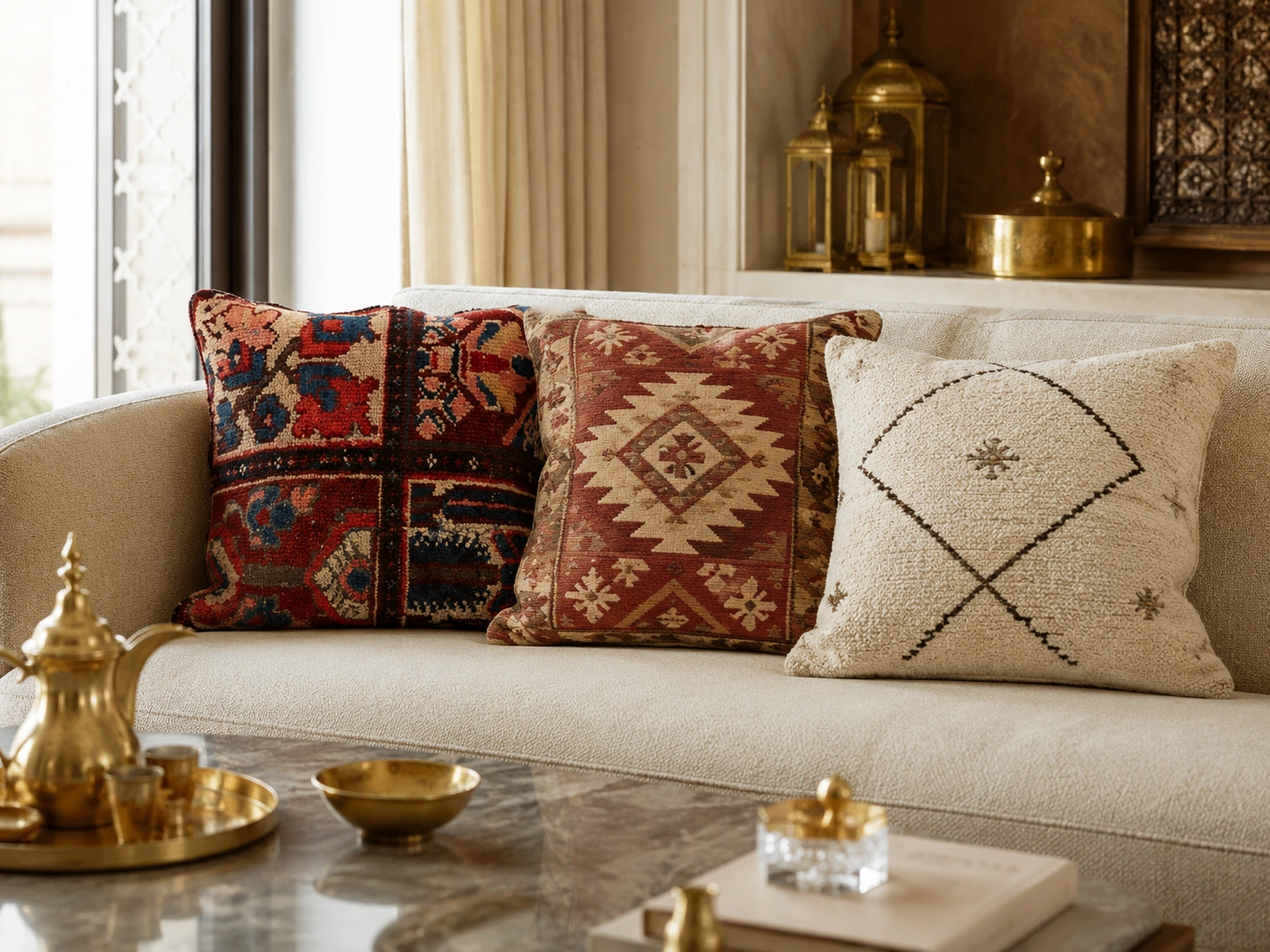
Persian cushions made from handwoven rug textiles usually bring depth, pattern richness, and a sense of heritage. You often see medallions, floral forms, intricate borders, and layered motifs in tones like ruby, navy, ivory, saffron, olive, and earthy red. They feel grounded. They feel storied. And in many Arab homes, they naturally echo the language of classic hospitality and collected elegance.
Turkish cushions
Turkish cushions, especially those inspired by kilim weaving, often lean toward geometry and restraint. Their beauty is in balance. The patterns are usually cleaner, the rhythm more graphic, and the palette can range from warm faded terracottas to soft neutrals and vintage reds. They work especially well in interiors that sit between classic and modern.
Moroccan cushions
Moroccan cushions tend to express themselves through texture as much as pattern. Many feature creamy neutrals, black or brown linework, earthy shades, or plush woven character. They are relaxed, tactile, and inviting. In the right room, they create an easy kind of elegance that feels calm rather than formal.
A fair comparison: beauty, mood, and placement
1) Visual richness
If your eye is drawn to detail, Persian cushions usually offer the deepest visual layering. They reward a closer look. Turkish cushions feel more edited and architectural. Moroccan cushions often feel lighter in visual complexity, but richer in texture and atmosphere.
None of these qualities is inherently better. They simply serve different interiors. A formal sitting room may benefit from the complexity of Persian weaving. A modern apartment may welcome the structure of Turkish design. A serene family lounge may come alive with Moroccan softness.
2) How the colors behave in the room
Color matters even more in Gulf homes, where natural light, polished surfaces, and generous room sizes can either enhance a textile or expose its weakness.
Persian cushions often sit beautifully with beige, greige, ivory, walnut wood, brass accents, deep green, camel, burgundy, and warm stone. Turkish cushions tend to pair well with cleaner contemporary palettes, especially when you want artisan character without too much visual density. Moroccan cushions are excellent in rooms built around sand tones, off-white, natural wood, soft linen, and an airy resort-like feeling.
3) Formality versus ease
Persian cushions often feel most at home in rooms where entertaining matters: a majlis, a formal living space, a guest area, or an elegant bedroom with layered styling. Turkish cushions move easily between formal and relaxed. Moroccan cushions usually shine in spaces where comfort and softness lead the experience.
That is why a woman styling her home should think beyond trend. Ask yourself: do I want this room to feel ceremonial, tailored, or relaxed? The answer usually points you toward the right textile tradition.
4) Emotional value
This part is easy to overlook, but it matters. Persian cushions often carry a stronger sense of memory, craft, and permanence. Turkish cushions bring cultured order and warmth. Moroccan cushions bring ease, comfort, and a natural handmade charm.
Sometimes the right choice is not the one that matches the sofa best. It is the one that makes the room feel more like you.
So which one truly belongs in a luxury Arab home?
The fair answer is this: all three can belong, but not in the same way.
If your home leans airy, textural, and softly contemporary, Moroccan cushions can be a beautiful fit. If your style sits between modern lines and artisanal warmth, Turkish cushions often offer the perfect middle ground.
But if your home carries the mood of layered hospitality, timeless detail, warm formality, and visual depth, Persian handwoven rug cushions usually feel the most natural in a luxury Arab setting.
This is not because Turkish or Moroccan pieces are less beautiful. It is because Persian textiles often speak the same design language as the Arab home: richness without noise, presence without stiffness, and decoration that feels rooted rather than temporary.
Choosing cushions for a luxury home: what to look at first
Before you fall in love with a pattern, look at the room itself. The best decisions usually come from context, not impulse.
- Start with the flooring. Marble, polished stone, and large-format tiles often benefit from the warmth and visual depth of handwoven Persian textiles.
- Study your wood and metal finishes. Walnut, dark oak, brass, bronze, and antique gold usually pair beautifully with Persian palettes.
- Think about how you host. For formal guest seating, Persian and refined Turkish cushions usually feel more grounded than overly casual styles.
- Do not over-match. A room feels more expensive when every piece is in conversation, not in uniform. One patterned cushion beside velvet or linen can look more elegant than a full identical set.
- Choose quality over quantity. A few authentic cushions for décor can transform a space more effectively than many filler pieces.
What the best luxury handmade cushions have in common
When women search for the best luxury handmade cushions, they are often looking for a feeling, not just a product. They want something that reads as tasteful, real, and worth bringing into the home.
Here is what usually makes the difference:
- A true woven surface rather than a printed imitation
- Colors with depth and character, not flat dye
- Balanced finishing and a shape that sits well on the sofa
- A design that looks beautiful from across the room and up close
- A sense of individuality instead of factory repetition
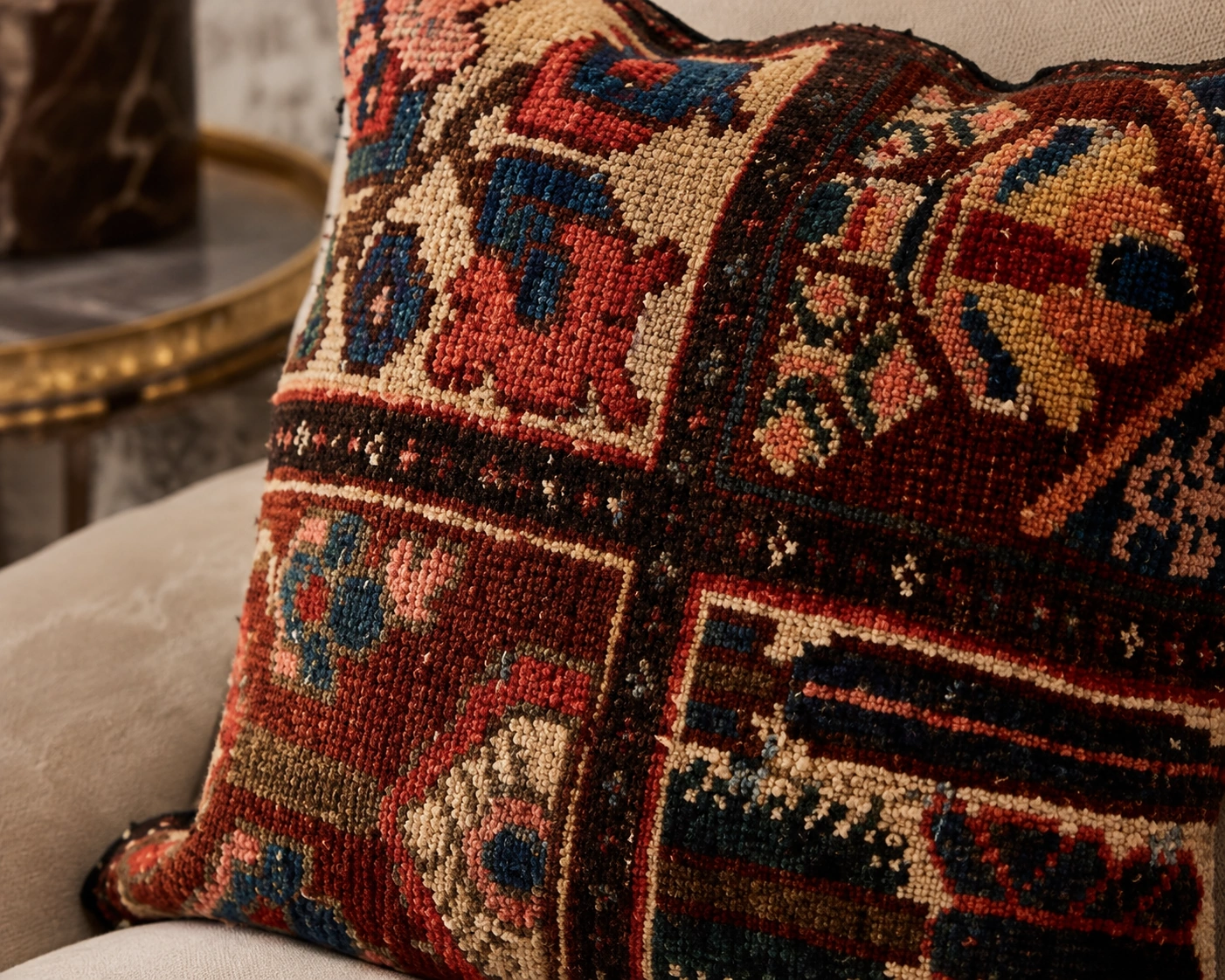
This is also where many buyers move from a simple Persian vs Turkish rug comparison into something more personal. They realize the question is not only origin. It is how the piece feels in the room, in the hand, and in daily life.
Why Persian handwoven rug cushions often win in Gulf interiors
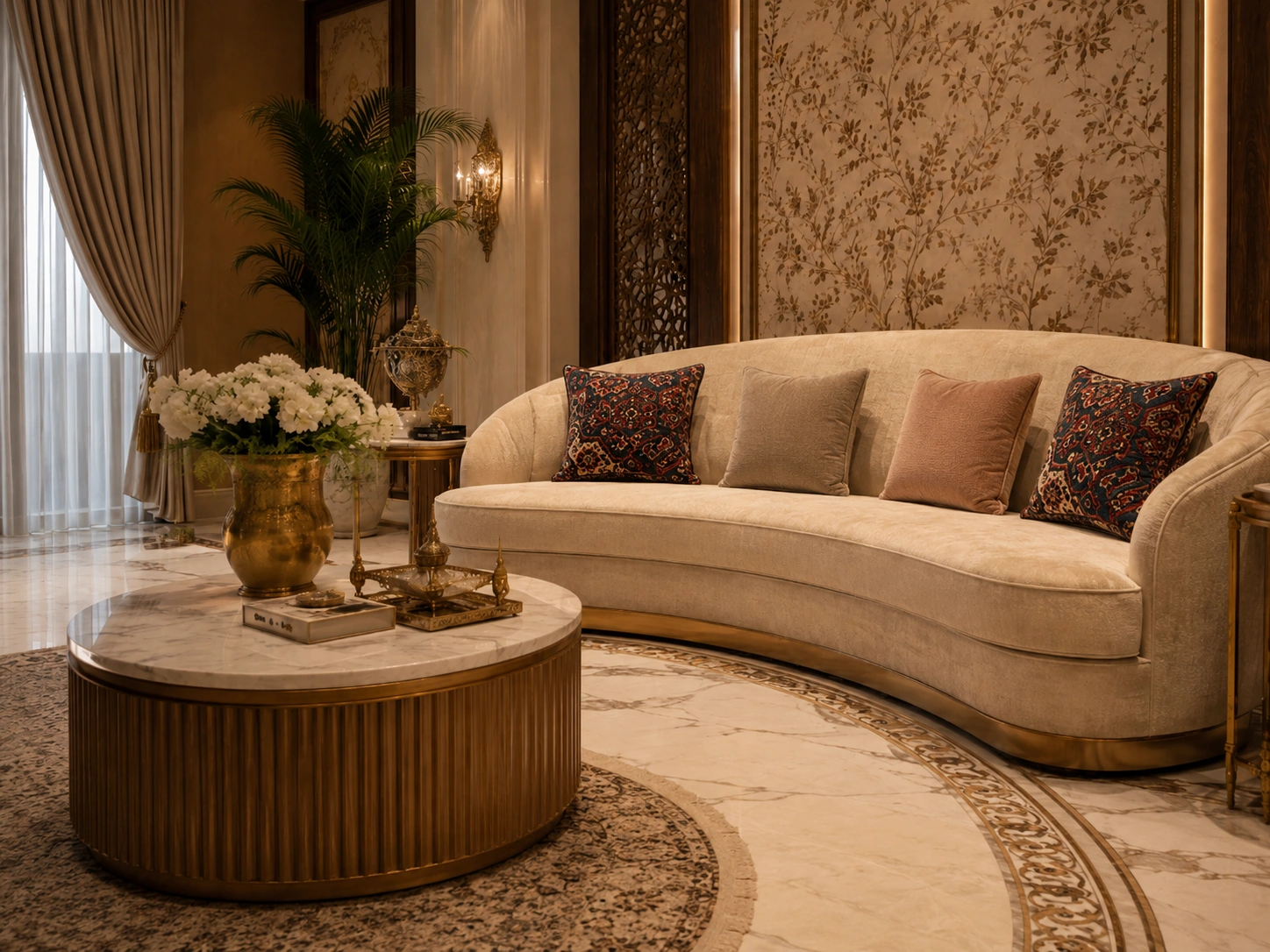
In many Gulf homes, there is already a natural appreciation for detail, craftsmanship, and hospitality. Persian handwoven rug cushions fit comfortably into that atmosphere. They sit beautifully beside carved consoles, classic chandeliers, layered drapery, brass trays, elegant side tables, and generous seating.
They also do something subtle but important: they add history to polished spaces. A room with sleek upholstery, stone surfaces, and measured lighting can sometimes feel a little too controlled. Persian textiles introduce soul. Not in a loud way. In a human way.
This is why Persian cushions are often chosen for majlis seating, statement sofas, reading corners, master bedrooms, and entrance benches. They bring softness, but they keep dignity. They decorate, but they do not feel flimsy.
Where each style works best
Best use for Persian cushions
Formal living rooms, majlis-inspired seating, elegant bedrooms, dark-wood reading corners, long benches, and rooms that need one strong textile focal point.
Best use for Turkish cushions
Transitional interiors, modern apartments, neutral sofas that need geometry, and homes that mix clean architecture with handcrafted detail.
Best use for Moroccan cushions
Relaxed lounges, airy bedrooms, quiet family spaces, sunlit corners, and interiors where texture is more important than ornate pattern.
Frequently asked questions
Are Persian cushions too traditional for a modern home?
Not at all. On a clean-lined sofa, a Persian cushion can act like jewelry. It keeps the space from looking flat and adds maturity without making the room feel old-fashioned.
Do Moroccan cushions only suit bohemian interiors?
No. In refined neutral palettes, Moroccan cushions can look very polished. They are especially effective when the room is built around texture, calm lighting, and natural materials.
Are Turkish cushions the safest choice?
Often, yes. They are very versatile. If you want something artisanal, elegant, and easy to blend with existing décor, Turkish cushions are an excellent option.
How many statement cushions does a room really need?
Usually fewer than you think. One or two strong pieces can have more impact than a large group. A refined room leaves space for the eye to rest.
Are original handwoven cushions worth it?
If you care about texture, artistry, and the emotional quality of your space, they usually are. Original woven pieces tend to age more gracefully in the eye because they carry variation and craft.
Final thought
The most useful way to understand this comparison is simple. Turkish cushions offer balance. Moroccan cushions offer softness and texture. Persian cushions offer depth, heritage, and a richer sense of occasion.
So which one truly belongs in a luxury Arab home? If your home is built around warm hospitality, layered beauty, and timeless detail, Persian handwoven rug cushions will often feel the most at home.
Bring the look home
At mawa store, we focus on Persian handwoven rug cushions for women who want their interiors to feel elegant, personal, and beautifully finished. Explore pieces that add story, warmth, and a refined textile presence to your seating, then choose the ones that feel naturally right for your home.