


Best Colors and Patterns for Persian Rug Cushions in Warm, Neutral, and Luxurious Spaces
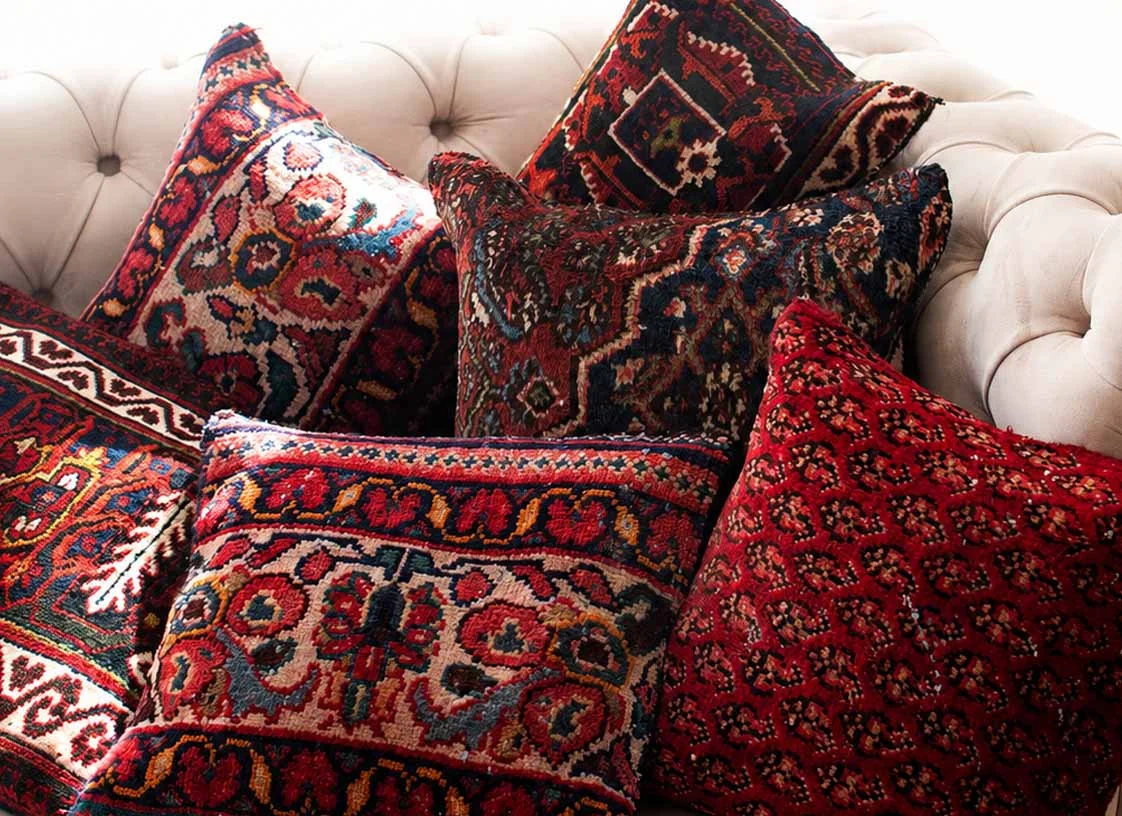
A room can feel finished or slightly unresolved depending on one small detail: the cushions. Not because cushions are loud, but because they quietly pull color, texture, and mood together. When those cushions are made from handwoven Persian carpet fragments, they do something more. They bring character, history, softness, and a sense of collected beauty that feels personal rather than staged.
That is why so many homeowners spend time comparing colors and patterns of Persian rug cushions before making a final choice. Some shoppers even search in Arabic using phrases like ألوان ونقوش خداديات السجاد الفارسي or خداديات بألوان دافئة. The question behind all those searches is the same: which pieces will actually make the room feel warmer, calmer, or more refined?
At Mawa Home Decor, the appeal of Persian carpet cushions is not only visual. They carry the irregular charm of handmade work. No printed copy can replace the depth of real woven texture, subtle fading, and traditional motifs that have aged beautifully. The right piece can soften a modern sofa, lift a neutral corner, or add quiet richness to a formal sitting room.
This guide will help you choose the best colors and patterns for three common interior moods: warm spaces, neutral spaces, and luxurious spaces. It is written as practical styling advice, not decoration theory for its own sake.
Why color and pattern matter more than people think
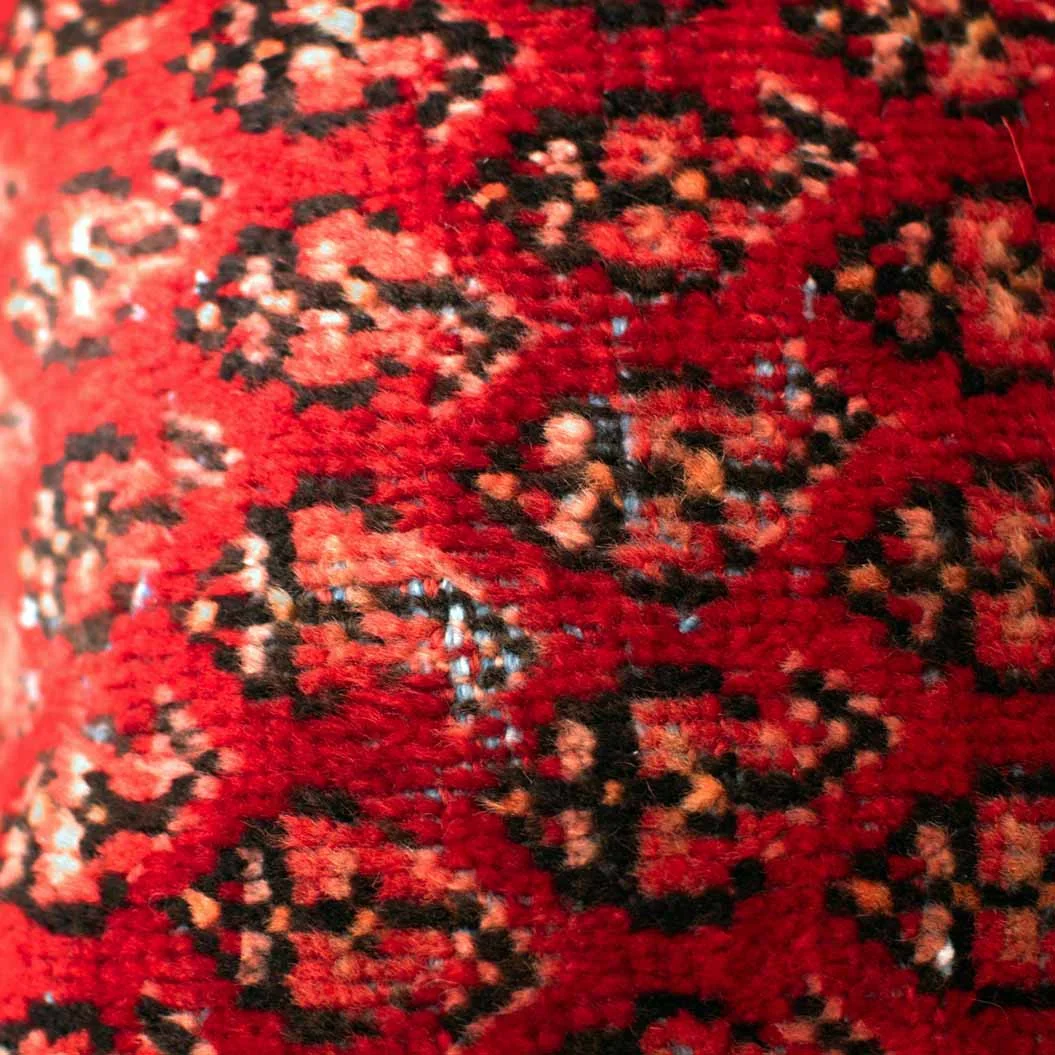
When you place a Persian rug cushion on a sofa, you are not only adding a pillow. You are adding visual rhythm. Color changes the temperature of the room. Pattern changes movement. Texture changes how “finished” the space feels.
A warm room often needs depth, not just more beige. A neutral room needs contrast, but not clutter. A luxurious room needs intention, not excess. Persian carpet cushions work well because they already contain layers: a base tone, accent threads, aged variation, and a motif that gives the eye somewhere to rest.
That layered quality is especially useful if your furniture is plain, your wall color is soft, or your space feels beautiful but slightly flat. The right cushion can solve that in a very understated way.
Best colors and patterns for warm spaces
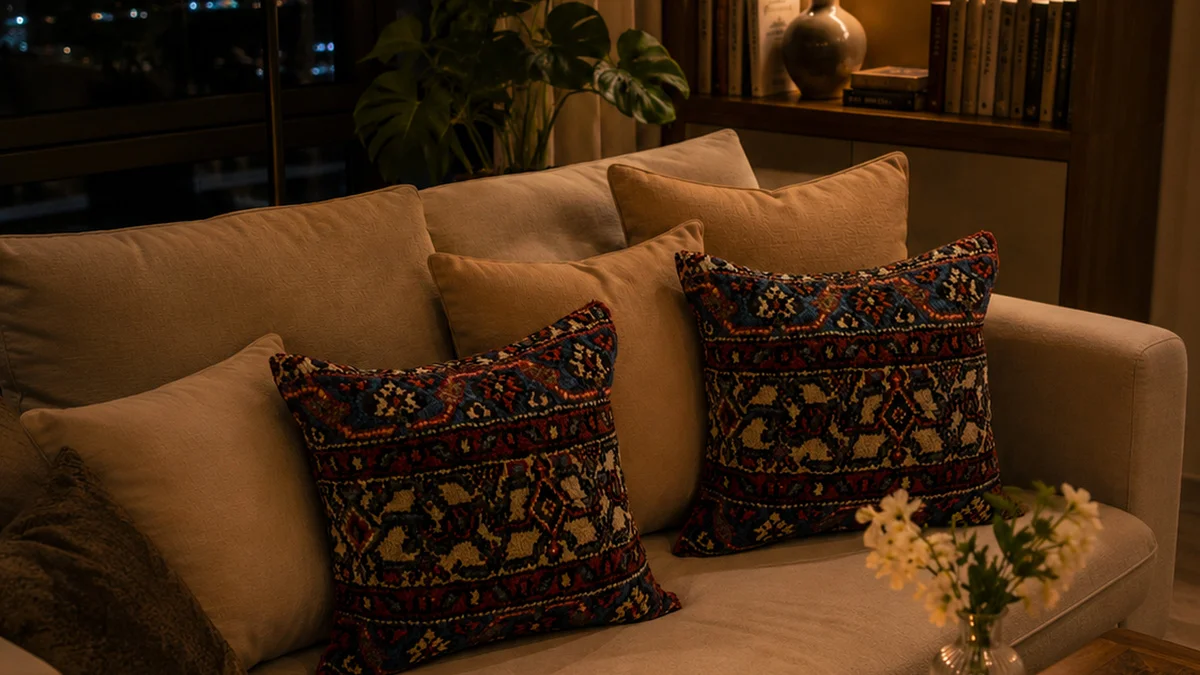
Warm interiors usually feel welcoming because they are built around earthy or sun-touched tones. Think camel, sand, honey, clay, walnut, terracotta, cinnamon, rust, or muted olive. In these rooms, Persian rug cushions should echo the warmth without blending into the background.
Colors that work especially well
- Terracotta and rust: ideal for rooms with wooden furniture, cream upholstery, and brass details.
- Brick red and faded crimson: classic Persian tones that add richness without feeling harsh.
- Ochre and golden beige: perfect when you want warmth that still feels light.
- Olive and muted moss: useful for balancing warm palettes with a natural, grounded note.
- Camel and tobacco brown: elegant choices for layered neutral-warm interiors.
If your room already has plenty of warm wood and creamy textiles, choose cushions with a little contrast in the weave. A rust base with hints of navy, charcoal, or faded ivory can keep the look sophisticated. Too much tone-on-tone warmth can make the room feel sleepy instead of inviting.
Which patterns look best in warm interiors?
For warm spaces, traditional Persian medallions, floral vines, and geometric tribal motifs all work beautifully, but scale matters. If your sofa is large and plain, a stronger motif can anchor it. If your room already has patterned curtains or a detailed area rug, smaller and more faded motifs are usually the better choice.
One of the easiest ways to style warm-toned Persian rug cushions is to mix one statement piece with two quieter companions. For example, one cushion with a strong central motif can sit next to a solid linen cushion and another with a more worn, textural pattern. This keeps the arrangement feeling collected instead of matched.
How to use Persian rug cushions in neutral interiors
Neutral interiors are popular for a reason. They feel calm, breathable, and easy to live with. But they can also feel unfinished if every surface sits in the same safe range of beige, greige, ivory, and soft grey. That is where Persian rug cushions for neutral décor become especially useful.
Many Gulf homes lean toward beige, off-white, stone, and light grey palettes. In those spaces, the goal is not to overpower the room. It is to add depth, a little memory, and a little warmth. This is exactly why searches such as خداديات للديكور المحايد and خداديات للكنب البيج والرمادي are so common.
For a beige sofa
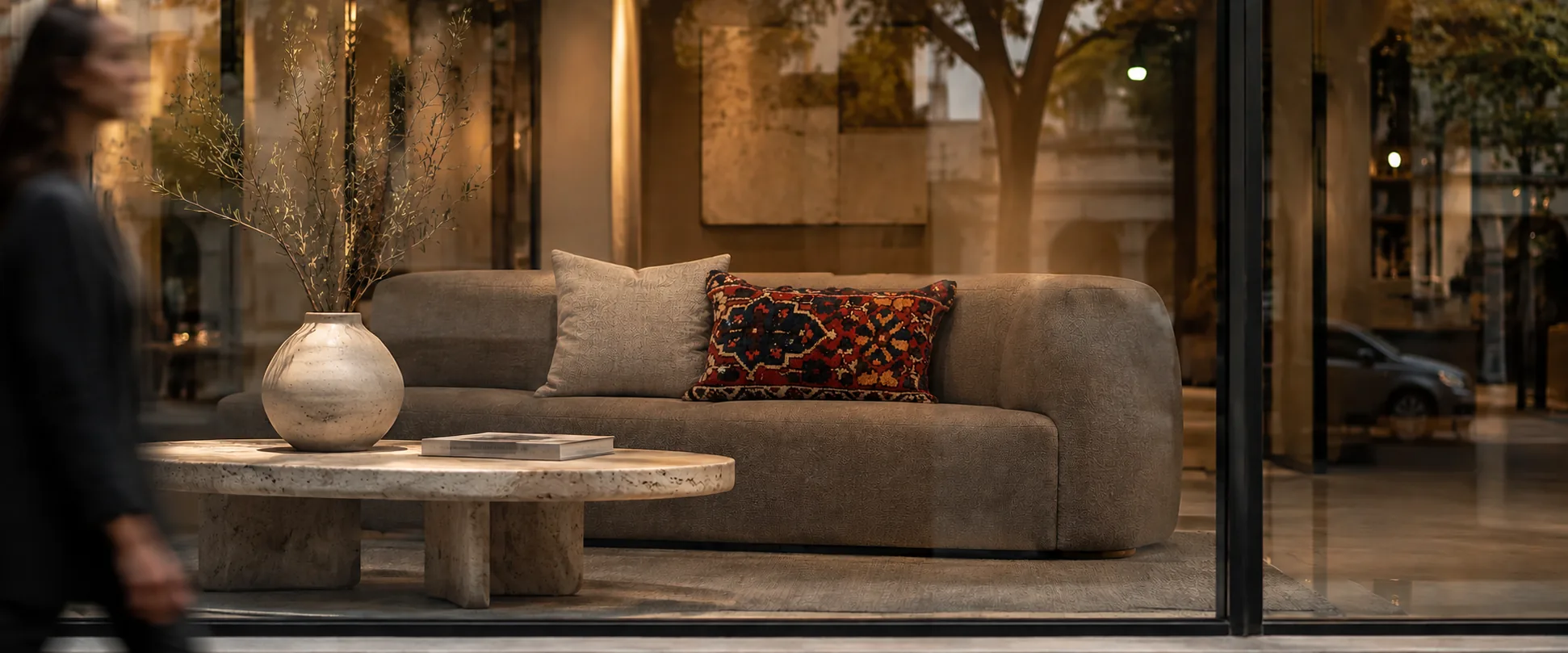
Beige sofas are wonderfully flexible, but they need contrast to avoid looking too uniform. Persian rug cushions with faded reds, muted blues, warm browns, and touches of cream work beautifully here. They make the sofa feel more layered without disturbing the calm of the room.
If your beige sofa is warm and sandy, lean toward terracotta, tobacco, olive, and antique red. If it is cooler and more taupe, add a little slate blue or charcoal detail through the pattern.
For a grey sofa
Grey sofas can feel modern and polished, but sometimes a little cold. Handwoven Persian carpet cushions soften that immediately. The trick is choosing tones that warm the grey rather than fight it.
Faded burgundy, soft cinnamon, dusty rose, muted gold, and deep indigo are excellent options. They create contrast, but they also bring personality into a clean-lined space. A grey sofa paired with a slightly aged Persian cushion often feels more relaxed and expensive than a sofa covered in identical modern pillows.
Best pattern direction for neutral rooms
If your room is minimal, do not be afraid of pattern. The woven texture already softens it. What matters more is the palette. A patterned cushion in restrained tones will feel more elegant than a bright, flat-colored pillow with no depth.
In very calm interiors, these pattern types work especially well:
- Faded medallions with soft contrast
- Small repeating motifs in muted colors
- Border-inspired designs that frame the cushion beautifully
- Tribal geometrics with enough negative space around them
Creating a luxurious look without making the room feel heavy
Luxury is often misunderstood. It is not about filling the room with more items. It is about editing carefully and choosing pieces with visible substance. Persian rug cushions are strong in luxurious interiors because they already suggest craftsmanship, story, and material depth.
If you want a more elevated look, focus on three things: richer color, stronger contrast, and breathing room around the accessories. A cushion with jewel-toned threads looks most refined when it is not competing with ten other decorative elements.
Colors that read as quietly luxurious
- Deep burgundy: warm, classic, and beautifully suited to cream, stone, or dark wood.
- Midnight blue and indigo: sophisticated choices for modern homes that still want character.
- Muted emerald or olive: ideal when you want richness without shine.
- Charcoal with faded red or ivory: elegant in monochrome or greige rooms.
- Antique gold accents: especially striking with brass, travertine, walnut, or marble.
This is where the idea of luxury cushions for home becomes more nuanced. True luxury in décor is not loud. It is thoughtful. A single well-chosen Persian carpet cushion on an accent chair can feel more refined than a pile of pillows chosen only because they match.
Patterns that help a room feel elevated
Symmetrical medallions, intricate floral structures, and aged all-over motifs often create the most polished effect. They give the eye detail to enjoy, but the handwoven finish keeps them from feeling stiff. If the room already includes marble, glass, or polished metal, these traditional motifs introduce softness and make the whole composition feel less cold.
How to coordinate multiple cushions without overmatching
One of the most common styling questions is simple: how many Persian rug cushions should you use, and how should they relate to each other?
A good rule is to coordinate, not duplicate. Because each handwoven piece carries slight variation, it is better to build a conversation between cushions than to force a perfect set.
- Start with one dominant cushion that has the strongest pattern.
- Choose a second cushion that repeats one of its quieter colors.
- Add a plain or lightly textured fabric cushion to give the eye a rest.
- Keep one common thread through the arrangement: a shared red, ivory, blue, brown, or olive tone.
- If your sofa is small, two cushions may be enough. Let the craftsmanship speak.
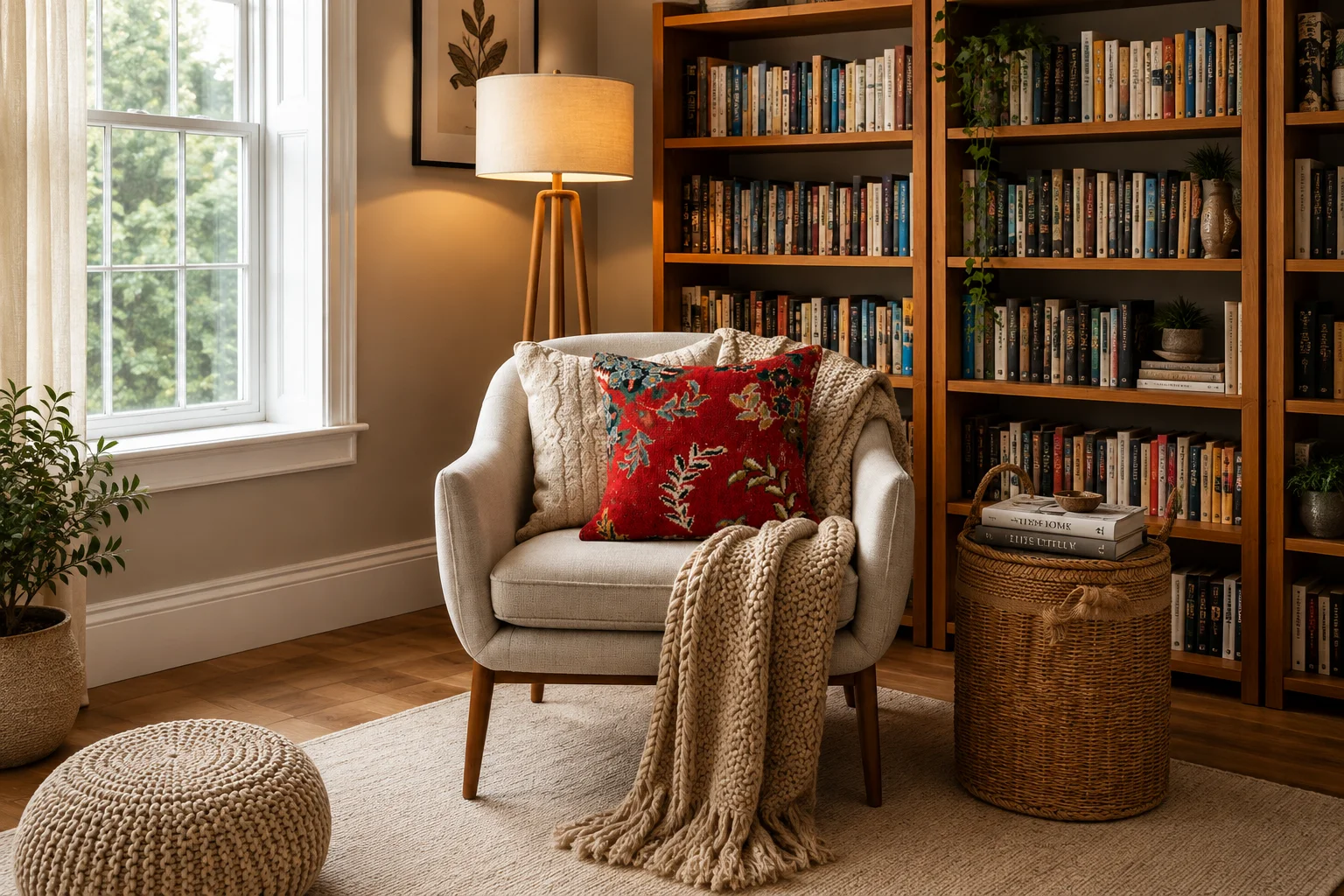
This approach works particularly well when styling cushions for beige and grey sofas, because it brings dimension without turning the seating area into a busy display.
Common mistakes to avoid
The most frequent mistake is choosing only by color and forgetting scale. A beautiful pattern can still look awkward if it is too dense for a compact chair or too delicate for a large sectional.
Another mistake is buying several cushions that all compete for attention. If every pillow has a bold medallion in a similar scale, the result can feel crowded. Mix strong with subtle.
It is also worth paying attention to the undertone of your room. A warm beige sofa and cool silver-toned accessories can still work together, but the cushion should act as the bridge. Pieces that contain both warm and cool notes are often the smartest choice.
Frequently asked questions
Are Persian rug cushions only suitable for traditional homes?
Not at all. They often look even more striking in modern interiors because the handmade pattern contrasts beautifully with clean lines. A minimalist room benefits from one or two pieces with history and texture.
What colors are safest if I am unsure where to start?
Muted reds, faded navy, warm brown, ivory, and olive are usually the easiest. They pair well with wood, stone, beige upholstery, and grey seating, which makes them practical for most homes.
Can I mix Persian rug cushions with plain fabric pillows?
Yes, and in many rooms that is the best approach. Plain linen, cotton, or velvet cushions help balance the richness of the woven pattern and keep the arrangement from feeling too busy.
How many cushions should I use on a sofa?
For a standard sofa, two to four is usually enough. The exact number depends on the size of the sofa and how relaxed or tailored you want the room to feel. Fewer cushions often look more polished.
Do these cushions work in homes with neutral décor?
Very well. In fact, neutral spaces are often where Persian carpet cushions make the biggest difference. They add depth, warmth, and individuality without changing the whole palette.
Final thoughts
The best Persian rug cushion is not always the boldest one. It is the one that understands the room around it. In a warm interior, it should deepen the comfort. In a neutral interior, it should add soul and contrast. In a luxurious interior, it should look deliberate, textured, and quietly confident.
When you choose with color temperature, pattern scale, and furniture tone in mind, these cushions do more than decorate. They help the home feel lived in, layered, and emotionally complete.
Ready to style your space with handcrafted character? Explore the Persian rug cushion collection at Mawa Home Decor and discover pieces selected for warm homes, neutral palettes, and refined interiors. You can find the collection through mawahomedecor.com and choose the colors and patterns that feel right for your living room, majlis, or favorite corner.