


How to Care for and Clean Handmade Carpet Cushions Without Damaging Color or Texture

A handmade carpet cushion brings more than comfort to a room. It adds depth, story, and a collected look that feels personal rather than generic. The texture is richer, the colors feel warmer, and the piece often becomes one of those details guests notice without being able to explain why.
That is exactly why care matters. A handmade carpet cushion is not the same as a standard cotton or velvet pillow cover. The woven face may include hand-knotted wool, naturally dyed yarns, vintage carpet fragments, or carefully restored textile panels. All of that gives it charm, but it also means rough washing, harsh products, and rushed stain removal can do real damage.
If you live in the Gulf, there is another layer to consider. Strong sunlight, indoor air conditioning, humidity shifts, perfume mist, and even regular use in family sitting areas can affect color and texture over time. The good news is that proper care is usually simple. You do not need constant washing. You need the right habits.
At Mawa Store, we always see the same thing: the women who enjoy their handmade home pieces for years are not the ones who clean them the hardest. They are the ones who clean them gently, quickly, and with a little understanding of the material.
Why handmade carpet cushions need different care
A normal cushion cover is often designed for frequent washing. A handmade carpet cushion is different. Its front panel may be made from wool fibers that react to heat, friction, and moisture in ways that ordinary fabric does not. If the dyes are natural or artisan-set, aggressive products can dull them or make them bleed. If the weave is older or denser, soaking can weaken the structure or distort the shape.
That does not mean these cushions are fragile in a precious, untouchable way. It simply means they respond best to thoughtful care. The goal is not to keep them hidden. The goal is to let them live beautifully in your home without aging them too quickly.
Start with the simplest rule: clean less, care better
The biggest mistake people make is treating a handmade carpet cushion like a regular washable pillow. In most cases, routine maintenance matters more than deep cleaning. If you stay consistent with a few small habits, you will need less intense cleaning later.
- Rotate the cushion every couple of weeks so one side is not always exposed to sunlight or constant pressure.
- Keep it away from direct afternoon sun, especially near windows or glass doors.
- Use low-suction vacuuming or a soft upholstery brush to lift dust before it settles deep into the fibers.
- Choose a supportive inner insert so the woven front is not strained or stretched.
- Handle spills immediately. Fast action is usually what protects both color and texture.
Before you clean anything, check these four things
1) Test colorfastness first
Dampen a clean white cloth with cool water and press it gently on a hidden area. If color transfers, stop there. The cushion should not be cleaned with a water-based method until it is assessed more carefully. This one-minute test can save the entire piece.
2) Look for loose seams or weak edges
If the zipper area, piping, or backing fabric is already stressed, cleaning can make the problem worse. Repair first, clean second.
3) Check the backing and the insert
Sometimes the front is carpet, but the back is cotton, linen, or velvet. Sometimes the insert should not be exposed to moisture at all. Knowing what you are cleaning helps you avoid accidental damage.
4) Identify the stain
Coffee, makeup, oil, perfume, and dust each behave differently. The safest cleaning method depends on what caused the mark in the first place.
Safe routine cleaning for day-to-day freshness
If your cushion is not stained and simply needs refreshing, keep the process dry and gentle. This is usually the best approach for regular care.
Use a vacuum on low suction with no rotating beater bar. Place the nozzle slightly above the surface or use a soft brush attachment. Move with the direction of the fibers rather than dragging harshly across them. If you do not want to vacuum directly, you can lightly brush the surface with a soft textile brush to lift dust and hair.
You can also air the cushion in a shaded, well-ventilated indoor or covered outdoor area for a short time. Fresh air helps, but direct sun does not. If the weather is humid, keep the airing brief and never leave the piece where moisture can settle into the wool.
How to spot clean without harming the weave
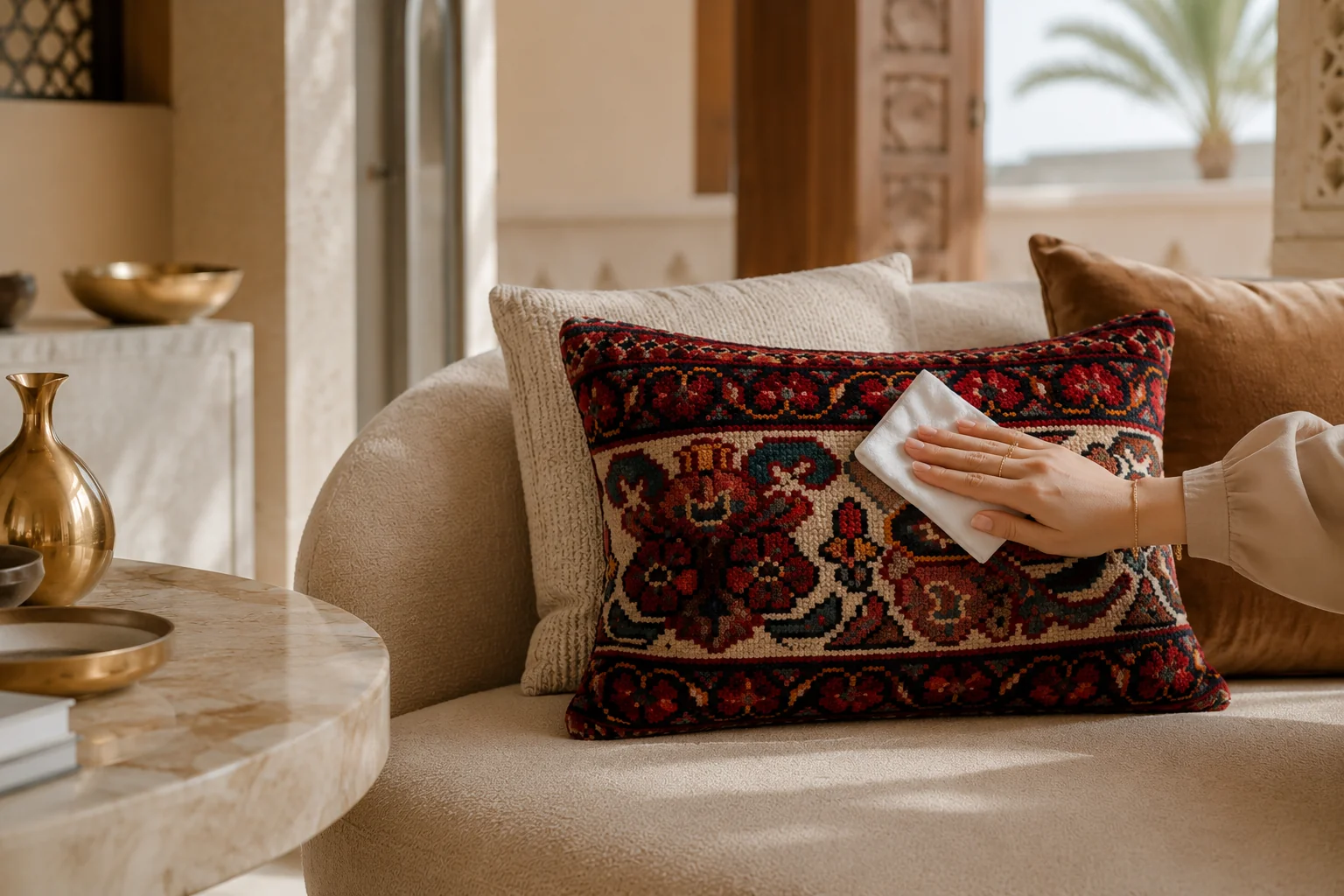
For small spills, the safest method is usually blotting, not rubbing. Rubbing pushes the stain deeper and roughens the pile. Blotting lifts moisture while protecting the surface.
- Use a dry white cloth or plain paper towel to absorb as much liquid as possible.
- Dab, do not scrub. Work from the outer edge of the stain toward the center.
- If needed, use a second cloth lightly dampened with cool water.
- For stubborn residue, add a tiny amount of mild wool-safe soap to the cloth, never directly onto the cushion.
- Blot again with a clean damp cloth to remove soap traces.
- Press with a dry towel and allow the cushion to air dry flat in shade.
For coffee or tea
Blot immediately. Most beverage stains become harder to remove once they dry. Cool water and a wool-safe soap are usually enough if you act quickly.
For oil, lipstick, or foundation
Do not spread the stain by rubbing. Lift any excess first. Then use the gentlest textile-safe cleaner appropriate for wool, testing it in a hidden area. Oily stains often need patience more than force.
For perfume or home fragrance marks
In many homes, cushions absorb a little fragrance over time, which is fine. The problem begins when perfume or room spray lands directly on the woven face. If that happens, blot lightly and avoid layering more product on top.
Can you hand wash a handmade carpet cushion?
This is one of the most common questions, and the honest answer is: sometimes, but not casually. A removable cover does not automatically mean it should be washed like everyday linen. Machine washing is rarely the right choice for a handmade carpet cushion.
Hand washing may be possible only if the cushion is structurally strong, the dyes do not bleed, the backing is stable, and the piece is not especially old or delicate. If any of those conditions are uncertain, it is better to avoid washing altogether.
If hand washing is absolutely necessary
- Remove the insert carefully.
- Fill a clean basin with cool water.
- Add a very small amount of mild detergent formulated for wool or delicate textiles.
- Dip the cover briefly and support it with both hands. Do not twist, scrub, or leave it soaking.
- Rinse quickly in cool water.
- Press between thick towels to remove excess moisture.
- Lay flat to dry in shade, reshaping the cover while it is still damp.
Never use hot water. Never wring it out. Never hang it dripping from one side, because that can distort the panel and pull on the seams.
What to avoid completely
- Bleach or whitening products
- Strong stain removers meant for synthetic fabric
- Steam cleaning at home
- Hot water
- Machine washing on a regular cycle
- Tumble drying
- Baby wipes or heavily scented wet wipes with alcohol
- Direct sun as a drying method
Some DIY cleaning advice sounds harmless, but handmade textiles are not the place for guesswork. A product that works on a kitchen towel can permanently flatten wool or shift color on a woven cushion.
How to protect color in Gulf homes
Color preservation is not only about cleaning. Placement matters just as much. Gulf homes often receive strong natural light, and even a beautiful, well-made textile can fade if it sits in the same sunny spot every day.
Use sheer curtains, rotate cushions from seat to seat, and avoid placing darker or richly dyed pieces directly against full sun for long hours. If you style your living room seasonally, switch cushion positions from time to time. This keeps the look fresh and helps preserve the balance of wear.
Air conditioning can also dry fibers over time, while humidity may introduce a musty feel if the piece is stored poorly. Try to keep cushions in a stable indoor environment. If you use bakhoor or room sprays, allow the fragrance to settle into the space rather than spraying directly onto the textile.
Protecting texture and structure
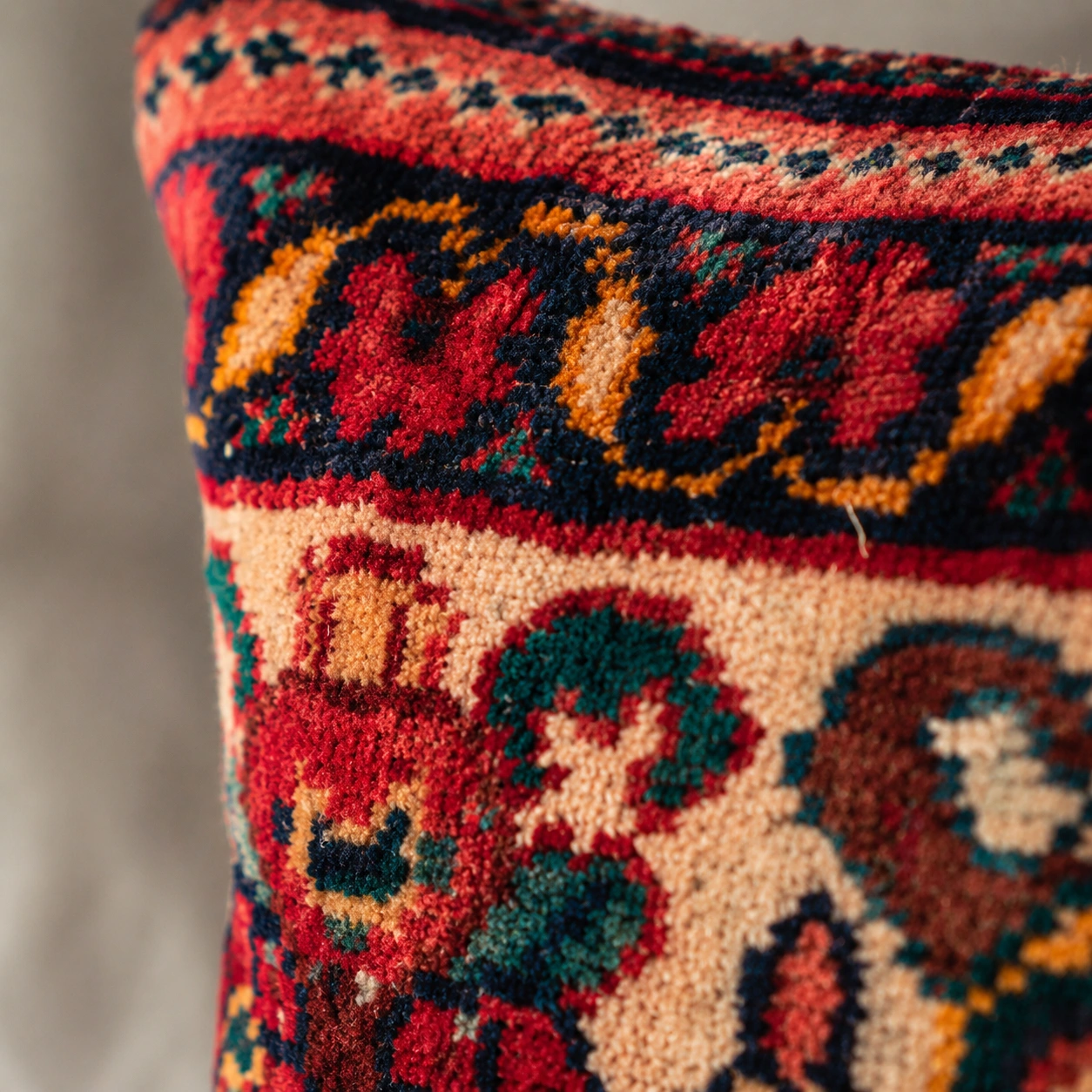
The luxurious feel of a handmade carpet cushion comes from more than the pattern. It comes from the body of the weave, the density of the wool, and the balance between the front panel and the insert inside.
Choose an insert that fills the cover nicely without overstuffing it. Too little filling makes the cushion slump and crease. Too much filling strains the seams and can stretch the woven face. A feather-down blend or a high-quality insert with soft resilience often creates the most elegant shape.
Also think about where the cushion is used. A decorative cushion on a reading chair ages differently than one placed on the floor, leaned on daily, or used in a high-traffic family area. There is nothing wrong with daily use, but rotating your pieces helps preserve the texture and keeps your space looking cared for.
Storage tips when you change your decor seasonally
If you like switching cushions with the season, store handmade carpet cushions properly rather than stacking them tightly in a plastic bin.
- Clean or dust the cushion before storing it.
- Make sure it is fully dry.
- Wrap it in breathable cotton or soft muslin.
- Avoid airtight plastic for long-term storage.
- Store flat when possible, or upright without crushing the front.
- Keep it away from damp cupboards, direct heat, and strong sun.
Common mistakes that shorten the life of a beautiful cushion
- Waiting too long before treating a spill
- Scrubbing a stain in circles
- Using too much soap
- Drying in direct sunlight
- Overwashing to keep it “extra clean”
- Ignoring minor seam damage until it spreads
Most long-term damage comes from good intentions applied too aggressively. Gentle care almost always wins.
Frequently Asked Questions
How often should I clean a handmade carpet cushion?
Light surface care every one to two weeks is usually enough in an actively used home. Deeper cleaning should be occasional and based on need, not habit.
Can I send it for regular dry cleaning?
Only if the cleaner truly understands handmade textiles and wool construction. Standard dry cleaning methods may be too harsh for artisan woven pieces.
What should I do if the color starts bleeding?
Stop immediately. Blot gently with a dry white cloth, keep the piece flat, and avoid adding more water. Continued washing can spread the dyes further.
Is a little wool shedding normal?
Yes, light shedding can happen, especially with newer wool surfaces. What is not normal is heavy fiber loss, loosening knots, or a roughened patch after cleaning.
Can I use a handmade carpet cushion every day?
Absolutely. These pieces are meant to be lived with. Just rotate them, support them with the right insert, and clean spills thoughtfully.
Why proper care matters beyond appearance
When you choose a handmade carpet cushion, you are usually choosing more than a color accent. You are choosing texture, craftsmanship, and a certain feeling in the room. It softens modern furniture, adds soul to neutral spaces, and makes the home feel layered in a very natural way.
Looking after that piece well protects more than the fabric. It protects the mood it creates. A cushion that keeps its color, shape, and tactile beauty continues to make the room feel considered and calm. That is part of its value.
Final thoughts
Caring for a handmade carpet cushion does not need to be complicated. Most of the time, the best approach is simple: keep dust light, act quickly with spills, avoid harsh products, protect it from direct sun, and resist the urge to overwash.
At Mawa Store, we believe home decor feels most luxurious when it is both beautiful and lived in. A handmade piece should not feel difficult. It should feel special in a quiet, lasting way.
Ready to style your home with pieces that feel warm, artistic, and personal? Explore the handmade carpet cushion collection from Mawa Store and choose designs you will enjoy for years—then care for them with the same attention they were made with.