


7 Stylish Ideas for Using Iranian Handwoven Rug Cushions in Modern Arab Interiors
Some rooms look perfectly put together on paper but still feel like something is missing. The furniture is right, the colors are calm, the layout works. Yet the space lacks warmth, personality, or that quiet sense of intention that makes a home feel truly yours. More often than not, the missing piece is not another large investment. It is something smaller, something textured, something with a story woven into it.
That is exactly where Iranian handwoven rug cushions come in. These are not ordinary decorative pillows. Each one carries the weight of traditional craftsmanship, the richness of Persian weaving, and a visual depth that factory-made accessories simply cannot replicate. And when placed thoughtfully inside a modern Arab home, they create a balance between heritage and contemporary taste that feels effortless rather than forced.
Whether you are furnishing a formal majlis, refreshing a living room, or putting the final touch on a cozy coffee corner, these cushions offer something rare: beauty that is functional, culturally meaningful, and endlessly versatile. Here are seven ideas to help you style them with confidence.
Why Persian Rug Cushions Belong in Modern Arab Homes
Modern Arab interiors, especially across the Gulf, tend to favor clean lines, generous proportions, and a sophisticated palette of neutrals. Ivory walls, marble floors, soft beige upholstery, warm wood tones. The aesthetic is polished and welcoming, designed for comfort and hospitality in equal measure.
But that same calm palette can sometimes feel flat. Everything coordinates so well that the room loses a bit of its energy. This is where a handwoven rug cushion earns its place. It introduces pattern, texture, and color variation without disrupting the overall harmony. It becomes the thing your eye settles on, the detail that gives the room its character.
- They bring warmth and texture to rooms dominated by smooth, modern surfaces.
- They connect contemporary styling with a sense of heritage and artistry.
- They create visual anchors in large, open-plan spaces.
- They are easy to restyle, move, and layer with other soft furnishings.
- They offer a sense of individuality that mass-produced decor cannot match.
There is also something emotionally grounding about placing a piece of handwoven art in your home. It reminds you and your guests that the space was designed with care, not just assembled from a catalog. And in a culture where hospitality is deeply personal, that distinction matters.
Idea 1: Let a Neutral Majlis Breathe Through One Bold Cushion Grouping
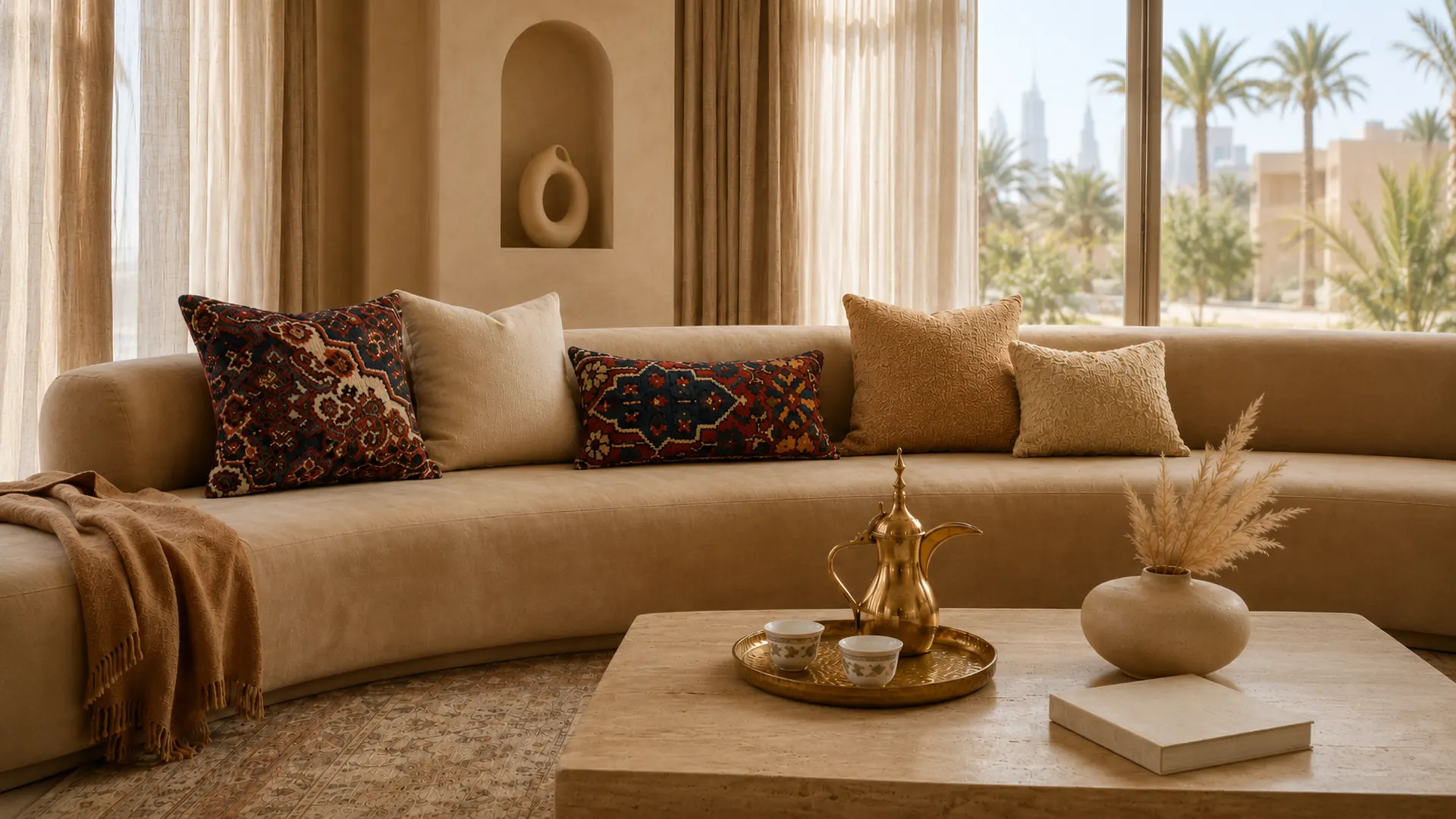
A majlis dressed entirely in soft neutrals is elegant, but it can also feel one-dimensional. Instead of adding more accessories across the room, try concentrating the visual interest in one area. Choose three to five Iranian rug cushions with a shared color story, deep reds and aged ivory, or navy and muted gold, and place them along the central section of your main seating.
This creates a visual focal point. It draws the eye without cluttering the space. The rest of the majlis can stay minimal, and that contrast is exactly what makes it feel designed rather than decorated.
A useful trick: pull one secondary color from the cushion and repeat it in a small nearby object. A tray, a vase, a candle holder. That echo ties the composition together and makes the whole arrangement look intentional.
Idea 2: Build a Low Seating Arrangement with Cohesive Patterns
Floor-level seating is a natural fit for many Gulf homes, whether for casual family evenings or relaxed guest gatherings. A low platform or layered rugs paired with handwoven cushions creates a warm, inviting setup that still looks polished and modern.
The key is cohesion. Choose cushions that share a tonal family rather than mixing every pattern and color you love. If you lean toward warm tones, stick with terracotta, rust, faded rose, and cream. If cooler shades suit your space better, consider indigo, slate, and washed-out blue. The variation in weaving patterns will add enough visual interest without overwhelming the arrangement.
This kind of styling also works beautifully in multipurpose rooms. A low seating corner can serve as a quiet reading area during the day and a social gathering spot in the evening, with the cushions doing most of the atmospheric work.
Idea 3: Pair Them with a Modern Sofa for Effortless Contrast
One of the most effective ways to style Persian rug cushions in a contemporary living room is to pair them with a clean-lined modern sofa. A sofa in solid cream, greige, taupe, charcoal, or olive becomes far more interesting when layered with one or two handwoven cushions alongside plain linen or velvet pieces.
The formula is simple: for every patterned rug cushion, use two solid-colored cushions beside it. This balance prevents the sofa from looking cluttered while still giving the woven piece room to stand out. The textures play off each other, soft against structured, smooth against woven, and the result feels rich without being overdone.
This approach suits women who want their living room to feel both refined and welcoming. The sofa stays sleek, but the handwoven cushion adds a layer of soul that guests notice immediately.
Idea 4: Create an Elegant Coffee Corner with a Single Statement Piece
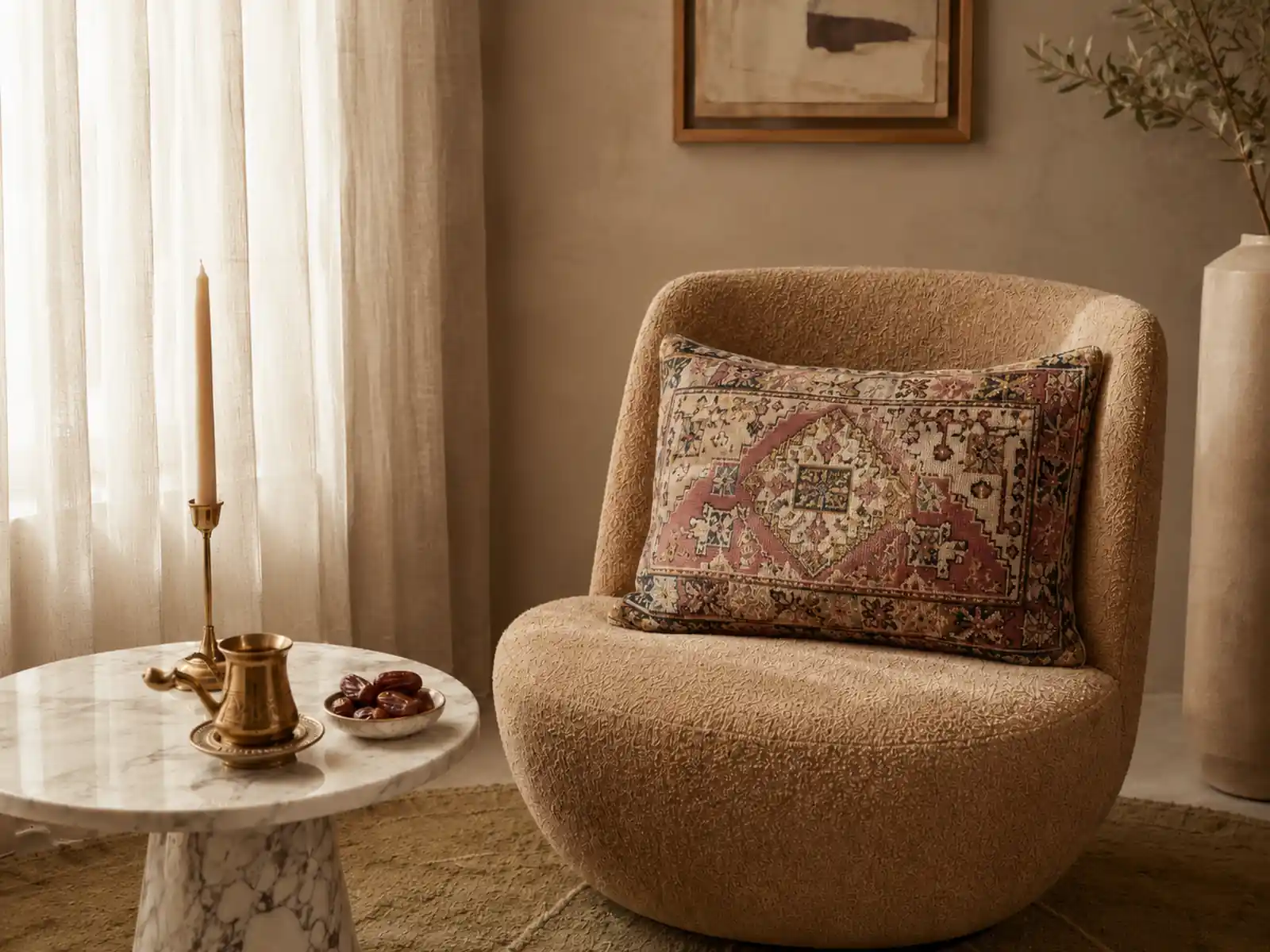
Not every styling idea requires a full set. Sometimes, one carefully chosen cushion is all it takes to elevate a small space. A reading chair, an entryway bench, a window seat, or a compact coffee corner can feel completely transformed by a single Persian rug cushion placed with purpose.
For an elegant coffee corner, think about the mood you want to set. A cushion in faded rose, cream, and soft gold creates a calm, feminine feel. A darker palette with deep blue, brick red, and charcoal tones adds depth and drama. Either way, the cushion becomes the anchor of that space, turning an overlooked corner into a place with presence.
This is also a low-risk way to experiment with the style before committing to a larger arrangement. Start with one piece. Live with it. See how it changes the feeling of the room. Most people find that once they experience the texture and warmth of a handwoven cushion up close, they want more.
Idea 5: Use Them to Warm Up Minimalist or Open-Plan Spaces
Minimalist design is beautiful, but it sometimes leans too cool. Rooms with open layouts, low furniture, and monochrome palettes can feel more like showrooms than homes. Handwoven rug cushions solve that problem gently. They add warmth, color, and tactile richness without breaking the minimalist structure.
Place a cushion on a sleek bench near the dining area. Add one to a lounge chair in the corner of a wide-open living space. Tuck one at the end of a platform bed. These small additions do not compete with the architecture of the room. They complement it, softening the edges and making the space feel lived in and loved.
This is especially important in Gulf homes, where interiors are often designed for both aesthetics and gathering. A room needs to feel beautiful, yes, but it also needs to feel ready for people. A thoughtfully placed cushion communicates that readiness.
Idea 6: Move Them Beyond the Living Room
Many people default to placing decorative cushions in the majlis or main living area. But one of the best things about handwoven rug cushions is their ability to bring warmth to unexpected parts of the home.
Consider a narrow lumbar-style cushion on an entryway bench. It sets the tone for the rest of the house the moment someone walks in. Or try a richly patterned cushion at the foot of a neutral bed, layered in front of plain sleeping pillows. It adds depth to the bedroom without making it feel cluttered.
A hallway chair, a dressing room seat, a balcony daybed: all of these are spaces where a single rug cushion can make a quiet but noticeable difference. It tells a visual story of consistency, the same attention to detail flowing through every room rather than being concentrated in just one.
Idea 7: Refresh Your Rooms Seasonally Without Replacing Furniture
One of the smartest uses for handwoven cushions is seasonal restyling. Instead of redecorating entire rooms, you can shift the mood of a space simply by rotating cushion tones.
In cooler months, bring out deeper shades: burgundy, forest green, chocolate, navy. They make rooms feel cozy and enclosed, perfect for winter evenings and Ramadan gatherings. When warmer weather arrives, switch to softer tones: faded red, dusty blue, cream, sand. The room feels lighter, brighter, and more open.
This approach is practical, affordable, and emotionally satisfying. You are not buying new furniture or repainting walls. You are simply letting one meaningful accessory shift the atmosphere. And because handwoven cushions are not trend-dependent, they never feel outdated. They just feel right in a different way each season.
Quick Styling Tips to Keep in Mind
- Always consider your sofa, rug, curtains, and wall color together before choosing a cushion. Context matters more than the cushion alone.
- If your floor rug is already heavily patterned, opt for cushions with tighter, more restrained designs.
- In large seating areas, use generously sized cushions so they hold visual weight.
- Repeat one color from the cushion in a nearby accessory for a cohesive look.
- Leave visual breathing room. Elegance is as much about what you leave out as what you add.
Frequently Asked Questions
Do Persian rug cushions look too traditional for a modern interior?
Not at all, as long as they are styled against a clean, contemporary backdrop. The contrast between the handwoven texture and modern furniture lines is what makes the look feel fresh. It is the tension between old craft and new design that creates visual interest, not a clash.
How many cushions should I use in a majlis?
There is no fixed rule, but less is usually more when it comes to patterned pieces. Three to five well-chosen cushions across the main visual area of a majlis often look better than a dozen scattered everywhere. Focus on placement, not quantity.
Can I mix different patterns together?
Yes, but give them a common thread. Shared color tones, a similar level of fading, or a consistent size help different patterns coexist gracefully. When every cushion looks completely unrelated to the others, the arrangement feels chaotic rather than curated.
What colors work best in Gulf-style interiors?
Warm neutrals form the ideal backdrop: sand, ivory, stone, warm grey, taupe. Against these, cushions in muted reds, aged blues, olive, tobacco, or black with subtle gold details tend to feel grounded and elegant. The goal is richness with restraint.
Are handwoven cushions practical for everyday use?
They can be, especially when used in spaces that receive regular but mindful use, a formal sitting area, a reading chair, a styled coffee corner. Like any piece of handcrafted home art, they reward care and thoughtful placement.
Can one cushion really make a difference?
Absolutely. A single cushion placed in the right spot, a bench, an accent chair, the center of a sofa, can shift the entire feeling of a room. It is not about filling space. It is about creating a moment of visual warmth and intention.
Final Thoughts
The appeal of Iranian handwoven rug cushions goes beyond their beauty. It is about what they do to a room. They add a sense of history, texture, and emotional depth that transforms a well-furnished space into a home that feels genuinely personal. In a modern Arab interior, where hospitality and aesthetics go hand in hand, that transformation matters.
You do not need to redesign your home to feel the difference. Sometimes, a single handwoven cushion in the right place is enough to change the atmosphere entirely.
Discover the Piece That Completes Your Space
If you are looking for home accessories that carry real artistry, natural warmth, and the kind of character that only comes from decades of handwoven tradition, explore the curated cushion collection at Mawa Home Decor. Each piece is crafted from authentic Iranian handwoven rugs, carefully selected and transformed into functional art for your home. Find the cushion that speaks to your space, your taste, and your way of living.